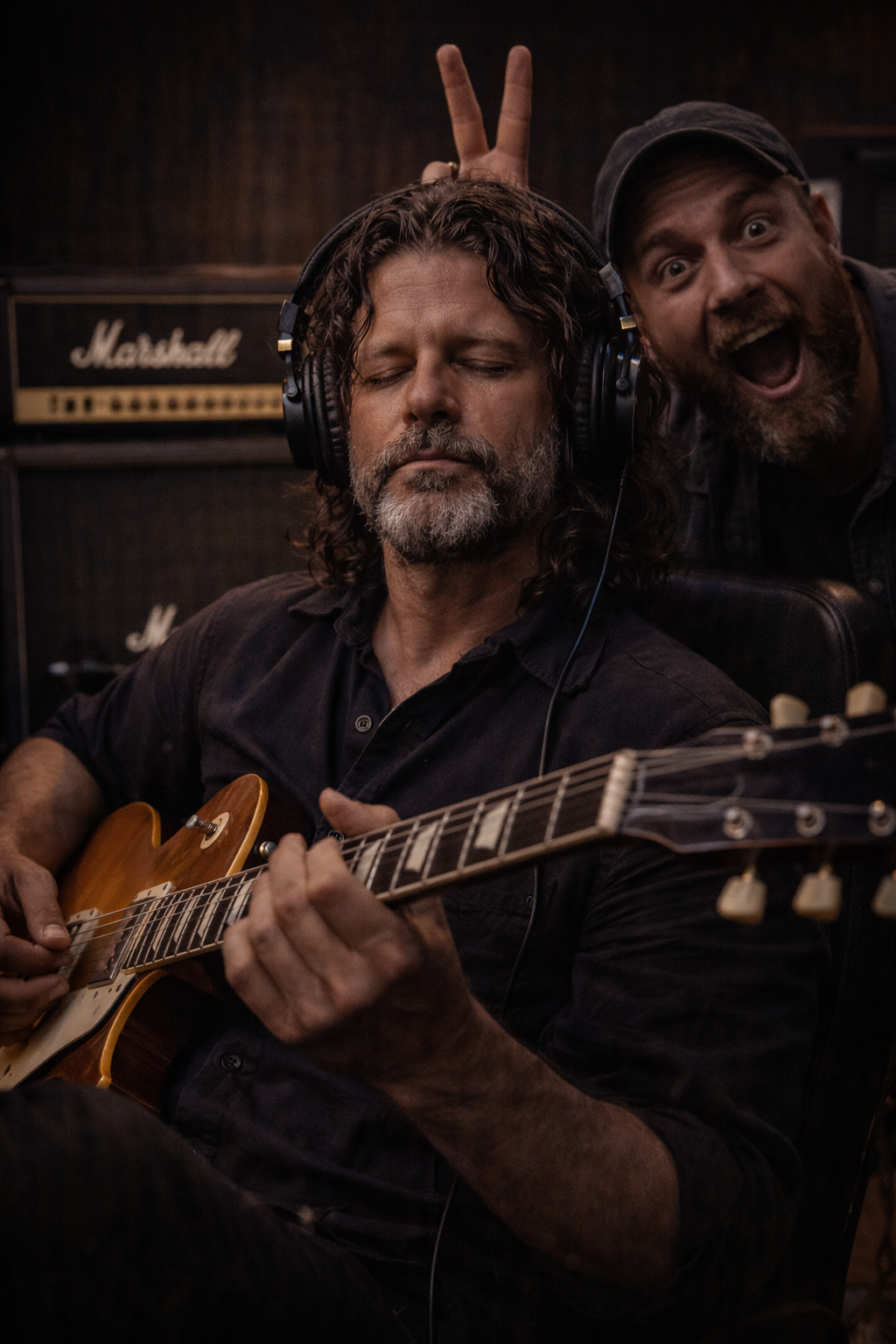
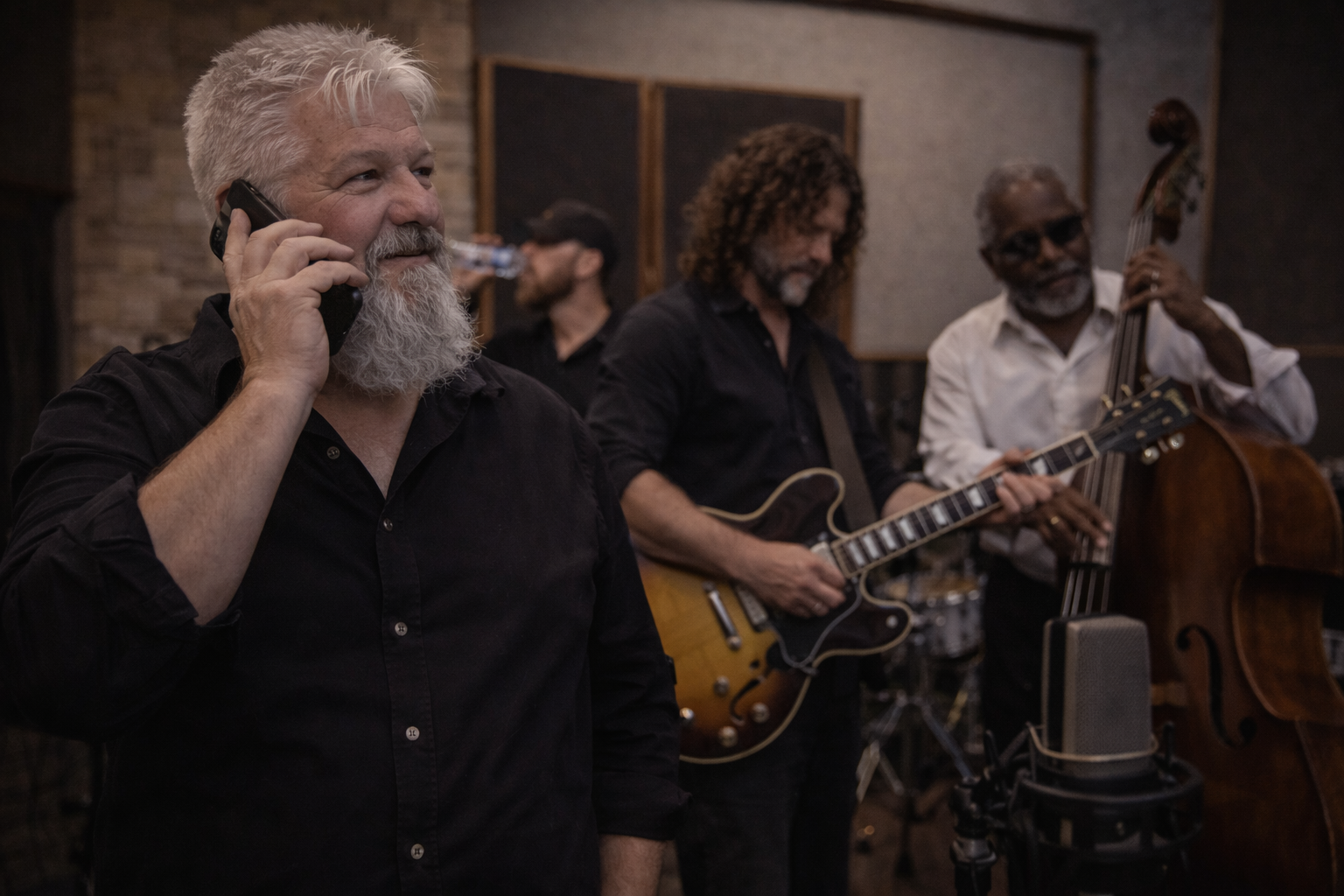
Dove nascono le canzoni
Qui le canzoni prendono forma, ancora fragili, tra silenzi, appunti e primi suoni. Ogni brano nasce come un passo incerto, cresce nel tempo e cambia strada.
Questa è la soglia dove l’idea diventa voce.
Hier nehmen die Lieder Gestalt an, noch zerbrechlich, zwischen Stille, Notizen und ersten Klängen.
Jedes Stück beginnt als zögernder Schritt, wächst mit der Zeit und schlägt neue Wege ein.
Dies ist die Schwelle, an der aus einer Idee eine Stimme wird.
Here, songs begin to take shape, still fragile, between silence, notes, and first sounds.
Each piece is born as an uncertain step, grows over time, and changes its path.
This is the threshold where an idea becomes a voice.
Nzemi!
Quannu lu timpuni si pigghia chiddu ca si vidi, resta chiddu ca nun si vidi: lu sustegnu. Nun veni cu bannera e mancu cu divisi. Veni zittu, comu passi supra petra vagnata. Porta sulu chiddu ca conta: na porta aperta, ’n pezzu di pani, na spadda ’nta lu scuru. E di colpu c’e quarchi cosa ca Harry nun po scippare, picchi nun e fattu di lignu o di tettu, ma di genti. Io nun putìa firmari lu ventu. Nun putìa evitari ca li vitri s’accurtìanu, ca li mura s’aprìanu, ca la notti addivintava cchiù forti di na priera. Ma putìa ristari cu tia. Propriu ddà, unni tuttu vacilla. Propriu ddà, unni li palori su picca. Ristari quannu l’autri s’alluntananu. Ristari quannu la paura prova a mmanciari li nomi. Chistu e lu sustegnu. Lu sustegnu cumincia cu na dumanna, semprici comu ’n rispiru: CI SI? E addiventa risposta, pisanti comu travi: CI SU. ’Nta dda risposta succedi lu miraculu: la paura nun sparisci, ma si spartì. E chiddu ca si spartì, pesa menu. Allura lu trimuri addiventa ritmu, lu silenziu addiventa vuci, e di tanti vuci nasci ’n cori. Di iu si passa a NZEMI. Lu sustegnu e puru travagghiu. Nun lu travagghiu di li discorsi granni, ma chiddu di li mani: lu primu chiodu ’ntra lu vacanti, la prima luci ’nta la stanza scura, lu primu filu chi si jetta prima ca quarcunu cadi. E la vuci ca nun sana, ma teni. Ca dici: nun hai a essiri forti pi stari cca. Hai sulu a stari cca. E mentri fora c’e ruvina, intra si custruisci quarchi cosa nova: ’n battitu di manu, ’n caminu di passi, ’na casa fatta di nuàutri. Picchi dopu lu timpuni cumincia lu veru cantu: lu rialzàrisi. Pezzu dopu pezzu. Spadda supra spadda. Finu a quannu la spiranza torna a purtari pisu. Finu a quannu li tetti tornanu ombra, nun paura. Finu a quannu di li ruvini torna vita. E quannu lu scuru grida n’autra vota, Sicilia nun rispunni sula: rispunni unita, comu ’na storia antica ca nun si conta, si vivi. NZEMI.
Il nuovo album è attualmente in lavorazione.
Uscirà a febbraio!
--> NUOVO ALBUM <--
Marzo 2026!
“Il pane celeste”
- Il pane celeste 90%
- Mille gradini 90%
- Robin - Qui e adesso! 70%
- Colore 70%
-
Universo 10%
- In attesa sul binario 40%
-
La felicità fa paura! 25%
- ??? Corona di luce 10% ???
- Nzemi 10%
Un concept album fatto di scene, come cortometraggi tagliati dalla luce: Marco di Grigio non guarda il mondo da un balcone, ci sta dentro, nel respiro della città. Sul bus, sul marciapiede della stazione, al banco del mercato, sul bordo della strada, davanti ai cassonetti, davanti alla panetteria nel primo mattino. Sente il motore vibrare, conta i secondi, vede mani che esitano e occhi che hanno disimparato a guardare. Ogni canzone è una porta, sì, ma dietro non c’è un altro universo: c’è la stessa stanza, con la luce che cambia. Dignità nel piccolo, quotidiano come verità, responsabilità come eco, amore senza posa, tempo come un campo che si stringe. Le parole diventano azioni, l’attesa diventa presenza vissuta, la diversità diventa calore, e uno sguardo silenzioso può accendere un coro.
"IL PANE CELESTRE" non è un album che urla. Rimane: come ali su un muro, come pane nella mano, come una canzone che continui a portare dentro, quando il bus è già girato l’angolo. L’innesco del brano titolo e della copertina è stato mio figlio, quando mi ha regalato un pane fatto da lui, dal sapore davvero celestiale.
Ein Konzeptalbum aus Szenen, wie Kurzfilme, aus Licht geschnitten: Marco di Grigio schaut nicht von einem Balkon auf die Welt, er ist darin, im Atem der Stadt. Im Bus, auf dem Bahnsteig der Station, am Tresen des Marktes, am Rand der Straße, vor den Müllcontainern, vor der Bäckerei am ersten Morgen. Er spürt den Motor vibrieren, zählt die Sekunden, sieht Hände, die zögern, und Augen, die verlernt haben zu schauen.
Jeder Song ist eine Tür, ja, doch dahinter ist kein anderes Universum: es ist derselbe Raum, mit dem Licht, das sich ändert. Würde im Kleinen, Alltag als Wahrheit, Verantwortung als Echo, Liebe ohne Pose, Zeit wie ein Feld, das enger wird. Worte werden zu Handlungen, das Warten wird zu gelebter Gegenwart, Vielfalt wird zu Wärme, und ein stiller Blick kann einen Chor entzünden.
"IL PANE CELESTRE" ist kein Album, das schreit. Es bleibt: wie Flügel an einer Wand, wie Brot in der Hand, wie ein Lied, das du innen weiterträgst, wenn der Bus schon um die Ecke gebogen ist. Der Auslöser für den Titelsong und das Cover war mein Sohn, als er mir ein von ihm gebackenes Brot schenkte, das wirklich himmlisch schmeckte.
A concept album made of scenes, like short films cut out of light: Marco di Grigio doesn’t watch the world from a balcony, he sits inside it, in the city’s breath. On the bus, on the platform, at the market table, at the curb, by the container bins, outside the bakery in the first morning. He hears the engine hum, counts the seconds, sees hands that hesitate and eyes that have forgotten how to look. Each song is a door, yes, but behind it there is no different universe, only the same room under changing light: dignity in small things, the everyday as truth, responsibility as an echo, love without posing, time as a field that keeps narrowing. Words become actions, waiting becomes lived presence, diversity becomes warmth, and a silent glance can ignite a choir. "IL PANE CELESTRE" is not an album that shouts. It stays: like wings on a wall, like bread in your hand, like a song you carry on the inside when the bus has already turned the corner. The inspiring spark for the title track and the album cover was my son, when he gifted me bread he baked himself, tasting almost heavenly.
"Il pane celestre" - Marco di Grigio siede sull’autobus nella prima luce del mattino. Il motore è acceso, si scalda lentamente, un ronzio profondo e paziente. C’è ancora tempo. Intorno a lui altri passeggeri, volti estranei, lo stesso respiro, lo stesso inizio di giornata. Attraverso i finestrini vedono una fila di persone davanti a una panetteria: corpi stanchi, sguardi bassi, uniti dalla fame di pane e di calore. Proprio davanti alla panetteria, sulla parete della casa, si estende un graffito: molte ali d’angelo, chiare, consumate dal quotidiano, una accanto all’altra – e in mezzo un’unica ala scura, storta. Chi è in fila resta lì davanti, senza guardare.
È lo sguardo che cambia qualcosa. Dal silenzio dell’osservare nasce un suono condiviso. Mentre l’autobus aspetta ancora, comincia un canto lieve. Marco non canta da solo: le voci dei passeggeri si uniscono e portano il canto con sé. Il canto diventa lo specchio di ciò che accade fuori. Angeli e diavoli non sono figure, ma stati dell’essere umano. Per un attimo siamo sollevati, quello dopo cadiamo. Speranza e durezza, grazia e colpa restano esposte sul muro, mentre la vita continua. L’autobus parte. La fila continua a respirare, il forno dà il suo pane, la città gira ancora. Le ali restano sul muro. Il canto ne porta il senso.
"Das himmlische Brot" - Marco di Grigio sitzt im ersten Licht des Morgens im Bus. Der Motor läuft, wärmt noch auf, ein tiefes, geduldiges Brummen. Es ist noch Zeit. Um ihn herum andere Fahrgäste, fremde Gesichter, derselbe Atem, derselbe Beginn eines Tages. Durch die Scheiben sehen sie eine Menschenschlange vor einer Bäckerei: müde Körper, gesenkte Blicke, vereint durch Hunger nach Brot und Wärme. Direkt vor der Bäckerei, auf der Hauswand, zieht sich ein Graffiti entlang: viele Engelsflügel, hell und vom Alltag gezeichnet, dicht nebeneinander – und dazwischen ein einzelner dunkler, schiefer Flügel. Die Wartenden stehen davor, ohne hinzusehen. Erst das Sehen verändert etwas. Aus dem stillen Beobachten wächst ein gemeinsamer Klang. Noch während der Bus wartet, beginnt ein leiser Gesang. Marco singt nicht allein – die Stimmen der Fahrgäste nehmen das Lied auf und tragen es weiter. Der Gesang wird zum Spiegel dessen, was draußen geschieht. Engel und Teufel sind keine Figuren, sondern Zustände. Für einen Augenblick sind wir erhoben, im nächsten fallen wir. Hoffnung und Härte, Gnade und Schuld liegen offen an der Wand, während das Leben weiterläuft. Der Bus fährt an. Die Schlange atmet weiter, der Ofen gibt sein Brot, die Stadt dreht sich. Die Flügel bleiben zurück. Das Lied nimmt ihren Sinn mit.
"The bread of heaven" - Marco di Grigio sits on the bus in the first light of morning. The engine is running, warming up, a low and patient hum. There is still time. Around him, other passengers, unfamiliar faces, the same breath, the same beginning of a day. Through the windows they see a line of people standing in front of a bakery: tired bodies, lowered eyes, united by hunger for bread and warmth. Directly on the bakery’s wall stretches a piece of graffiti: many angel wings, pale and worn by everyday life, side by side – and among them one single dark, crooked wing. Those who wait stand before it, without looking. It is the act of seeing that changes something. From silent observation, a shared sound begins to grow. While the bus is still waiting, a soft song starts. Marco does not sing alone: the voices of the passengers join in and carry the song forward.
The singing becomes a mirror of what happens outside. Angels and devils are not figures, but states of being human. For a moment we are lifted, the next we fall. Hope and hardness, grace and guilt lie open on the wall, while life continues to move on. The bus pulls away. The line keeps breathing, the oven gives its bread, the city keeps turning. The wings remain on the wall. The song carries their meaning onward.
Il pane celeste
Mille gradini (A Thousand Steps) is a song about the journey, not the arrival. It begins up high on a cliff, where the wind demands nothing and the sea does not judge. From there, the gaze turns back, not out of regret, but out of clarity. The thousand steps stand for a life that wasn’t planned, but walked: through narrow alleys, small towns, rented rooms, and false versions of “home.” Step by step, often without knowing where it leads, but always moving forward. This song speaks of a weariness that isn’t empty. Of mistakes that aren’t taken back. Of choices that felt right back then, because they were all you had. Mille gradini is neither a reckoning nor a triumph. It is a pause. A moment in which you realize: you don’t have to climb higher. you don’t have to go back. You are allowed to stop. Stripped down acoustically, carried only by voice and guitar, it leaves space for what matters: breath, memory, and the quiet “Ti amo” at the end, not as a love confession, but as consent to your own path.
MILLE GRADINI
Mille gradini è una canzone sul cammino, non sull’arrivo. Inizia in alto, su una scogliera, dove il vento non chiede niente e il mare non giudica. Da lì lo sguardo torna indietro, non per rimpianto, ma per chiarezza. I mille gradini diventano la misura di una vita non programmata, ma vissuta: vicoli stretti, paesi piccoli, stanze prese in affitto, case chiamate “casa” per bisogno più che per verità. Un passo dopo l’altro, spesso senza sapere dove, ma sempre avanti. Questa canzone parla di una stanchezza che non è vuoto. Di errori che non si cancellano. Di scelte che allora sembravano giuste, perché erano tutto ciò che c’era. Mille gradini non è un bilancio e non è un trionfo. È una pausa. Un punto fermo in cui si capisce che non serve salire ancora, e non serve tornare. Si può restare. Con una chitarra acustica e una voce vicina, senza rumore inutile, rimane spazio per l’essenziale: il respiro, la memoria, e quel “Ti amo” finale che non è una scena, ma un consenso silenzioso al proprio percorso.
Mille gradini (Tausend Stufen) ist ein Lied über den Weg, nicht über das Ankommen. Es beginnt oben, an einer Klippe, wo der Wind nichts fordert und das Meer nicht urteilt. Von dort fällt der Blick zurück – nicht aus Reue, sondern aus Klarheit. Die tausend Stufen stehen für ein Leben, das nicht geplant, sondern gegangen wurde: durch enge Gassen, kleine Orte, gemietete Zimmer, falsche Zuhause. Schritt für Schritt, oft ohne zu wissen wohin – aber immer weiter. Dieses Lied erzählt von Müdigkeit, die nicht leer ist. Von Fehlern, die nicht widerrufen werden. Von Entscheidungen, die sich damals richtig anfühlten, weil sie alles waren, was man hatte. Mille gradini ist keine Abrechnung und kein Triumph. Es ist ein Innehalten. Ein Moment, in dem man erkennt: Man muss nicht weiter hinauf. Man muss nicht zurück. Man darf stehen bleiben. Akustisch reduziert, getragen nur von Stimme und Gitarre, bleibt Raum für das Wesentliche: den Atem, die Erinnerung, das stille „Ti amo“ am Ende – nicht als Liebesgeständnis, sondern als Einverständnis mit dem eigenen Weg.
Robin riempie ogni stanza con la sua gentilezza, con il suo splendore: "ROBIN – QUI E ADESSO". Robin non ha bisogno di grandi parole. Lui c’è. E quando ti sorride, una stanza cambia. Robin non vive nel “dopo”. Robin vive adesso. Mentre noi facciamo piani e impiliamo paure, lui resta nel momento come una roccia tranquilla. Non può parlare, ma capisce: gli umori, le pause, il tremito nascosto dietro una frase. Non ascolta solo con le orecchie, ma con tutto ciò che in lui è sveglio. Il suo sorriso non è un dettaglio, è una forza: silenziosa, limpida, incorruttibile. Questa canzone racconta una vita che non deve essere spiegata per essere profonda. Robin partecipa. Si accorge quando qualcuno non sta bene. Non risponde con le parole, ma con la presenza. Quando ci perdiamo nelle preoccupazioni, ci riporta indietro senza chiedere nulla: uno sguardo, un sorriso, e all’improvviso è di nuovo adesso. "ROBIN – QUI E ADESSO" parla anche di veglia. Di notti che non dormono. Di un respiro che va custodito. Di una responsabilità ventiquattr’ore su ventiquattro. Non per paura, ma per amore. Un amore che resta quando lo spazio si stringe. Un amore che lascia la luce accesa. Settantquattro volte Robin è stato sulla soglia tra la vita e la morte. Non con rumore. Non con grida di battaglia. È rimasto nel silenzio. Sempre di nuovo.
Un leone non per la forza, ma per la perseveranza. Non solo un leone sotto le stelle, ma un leone nel cuore, ogni giorno. Questa canzone non dimentica la madre. Una madre che già prima della nascita di Robin sapeva chi sceglieva. In un sogno, una voce le chiese quale bambino volesse. Lei indicò quello seduto, quello silenzioso, quello diverso. Quando le dissero che era disabile, rispose: Non importa. Questo bambino brilla più di tutti gli altri. E racconta anche di un patrigno che resta. Non per dovere, ma per amore. Orgoglioso. Grato. Felice. Un figlio del cuore. "ROBIN – QUI E ADESSO" non è una canzone triste. È una canzone di gioia, di rispetto e di ammirazione. Una canzone su una vita che ci tiene con i piedi per terra. Una canzone che ricorda: A volte, la cosa più grande che una persona possa dare è semplicemente esserci, davvero.
Grazie per ogni secondo con te, Robin.
ROBIN - QUI E ADESSO!
Robin füllt jeden Raum mit seiner Freundlichkeit, mit seinem Strahlen: "ROBIN – HIER UND JETZT".
Robin braucht keine großen Worte. Er ist da. Und wenn er dich anlächelt, wird ein Raum anders.
Robin lebt nicht später. Robin lebt jetzt. Während wir Pläne schmieden und Angst stapeln, bleibt er im Moment stehen wie ein ruhiger Fels. Er kann nicht sprechen, doch er versteht: Stimmungen, Pausen, das Zittern hinter einem Satz. Er hört nicht nur mit Ohren, sondern mit allem, was in ihm wach ist.
Sein Lächeln ist kein Detail, sondern eine Kraft: leise, klar, unbestechlich. Dieses Lied erzählt von einem Leben, das nicht erklärt werden muss, um tief zu sein. Robin nimmt Anteil. Er merkt, wenn es jemandem nicht gut geht. Er antwortet nicht mit Worten, sondern mit Präsenz. Wenn wir uns in Sorgen verlieren, holt er uns zurück, ohne etwas zu verlangen: ein Blick, ein Lächeln, und plötzlich ist wieder Jetzt. "ROBIN – QUI E ADESSO" erzählt auch von Wachsein. Von Nächten, die nicht schlafen.
Von Atem, der bewacht werden muss. Von Verantwortung rund um die Uhr. Nicht aus Angst, sondern aus Liebe. Liebe, die bleibt, wenn es eng wird. Liebe, die Licht anlässt. Vierundsiebzig Mal stand Robin an der Schwelle zwischen Leben und Tod. Nicht mit Lärm. Nicht mit Kampfgeschrei. Er blieb im Stillen. Immer wieder. Ein Löwe nicht durch Stärke, sondern durch Beharrlichkeit. Nicht nur ein Löwe unter den Sternen, sondern ein Löwe im Herzen, jeden Tag. Dieses Lied vergisst die Mutter nicht. Eine Mutter, die schon vor Robins Geburt wusste, wen sie wählt. In einem Traum fragte eine Stimme sie, welches Kind sie haben wolle. Sie zeigte auf das sitzende, das stille, das andere. Als man ihr sagte, es sei behindert, antwortete sie: Das spielt keine Rolle. Dieses Kind strahlt heller als alle anderen.
Und es erzählt von einem Stiefvater, der bleibt. Nicht aus Pflicht, sondern aus Liebe. Stolz. Dankbar. Glücklich. Ein Sohn des Herzens. "ROBIN – QUI E ADESSO" ist kein trauriges Lied. Es ist ein Lied der Freude, des Respekts und der Bewunderung. Ein Lied über ein Leben, das uns erdet. Ein Lied, das erinnert: Manchmal ist das Größte, was ein Mensch geben kann, einfach da zu sein, ganz.
Danke für jede Sekunde mit dir, Robin."
Robin fills every room with his kindness, with his light: "ROBIN – HERE AND NOW." Robin doesn’t need big words. He is there. And when he smiles at you, a room becomes different. Robin doesn’t live in “later.” Robin lives now. While we make plans and stack our fears, he stays in the moment like a quiet rock. He cannot speak, yet he understands: moods, pauses, the trembling behind a sentence. He doesn’t listen with ears alone, but with everything in him that is awake. His smile is not a detail, it is a force: soft, clear, incorruptible. This song tells of a life that doesn’t need to be explained to be deep. Robin feels with others. He notices when someone isn’t well. He doesn’t answer with words, but with presence. When we get lost in worry, he brings us back without asking for anything: a glance, a smile, and suddenly it is now again. "ROBIN – HERE AND NOW" is also a song about staying awake. About nights that don’t sleep. About breath that must be watched over. About responsibility, twenty-four hours a day. Not out of fear, but out of love. Love that remains when things get tight. Love that keeps the light on. Seventy-four times Robin has stood on the threshold between life and death. Not with noise. Not with battle cries. He stayed in the quiet, again and again. A lion not through strength, but through persistence. Not only a lion under the stars, but a lion in the heart, every day. This song does not forget the mother. A mother who, even before Robin was born, knew whom she would choose. In a dream, a voice asked her which child she wanted. She pointed to the sitting one, the silent one, the other one. When they told her he was disabled, she answered: That doesn’t matter. This child shines brighter than all the others. And it tells of a stepfather who stays. Not out of duty, but out of love. Proud. Grateful. Happy. A son of the heart. "ROBIN – HERE AND NOW" is not a sad song. It is a song of joy, respect, and admiration. A song about a life that grounds us. A song that reminds us: Sometimes the greatest thing a person can give is simply to be there, fully.
Thank you for every second with you, Robin.
Colore
Inizia con un battito: legno, mano, levare. Un groove che non spinge, ma unisce. COLORE parla di diversità: opinioni, vestiti, fedi, lingue. Non come separazione, ma come movimento vivo. Nel ritornello, il colore diventa metafora. Non superficie, ma vita, cambiamento, mescolanza. E in mezzo a tutto questo vale una cosa: anche se siamo così diversi, cantare significa trovare gioia e trovare amici. La voce apre uno spazio dove gli estranei si avvicinano. Il reggae porta la canzone calda e radicata. La chitarra guida, i tamburi rispondono, il chorus invita come una mano aperta. Forse Dio ama il mondo proprio per questo:
perché respira. In ogni colore.
Es beginnt mit einem Puls: Holz, Hand, Offbeat. Ein Groove, der nicht drängt, sondern verbindet.
COLORE erzählt von Vielfalt: Meinungen, Kleidung, Glauben, Sprachen. Nicht als Trennung, sondern als lebendige Bewegung. Im Refrain wird Farbe zur Metapher. Nicht Oberfläche, sondern Leben, Wandel, Mischung. Und mitten in all dem gilt: Obwohl wir so verschieden sind, bedeutet Singen, Freude zu finden und Freunde zu finden. Die Stimme öffnet einen Raum, in dem Fremde näher rücken. Der Reggae trägt das Lied warm und erdig. Die Gitarre führt, die Trommeln antworten, der Chorus lädt ein wie eine offene Hand.
Vielleicht liebt Gott die Welt genau deshalb: weil sie atmet. In jeder Farbe.
It begins with a pulse: wood, hand, offbeat. A groove that doesn’t push, it brings people together. COLORE speaks of diversity: opinions, clothes, faiths, languages. Not as separation, but as living movement.
In the chorus, color becomes a metaphor. Not surface, but life, change, and mixture. And in the middle of it all, one thing is true: even though we’re so different, singing means finding joy and finding friends.
A voice opens a space where strangers move closer. The reggae carries the song warm and rooted. The guitar leads, the drums answer, the chorus invites like an open hand. Maybe that’s exactly why God loves the world:
because it breathes. In every color.
Universo
Universo is a song about doubt that doesn’t destroy, but makes you honest. It follows a man who loves deeply, yet knows himself well enough to struggle believing he could truly be chosen. He doesn’t question her love. He questions himself. The movement in the song isn’t escape. It’s a quiet decision to keep walking, step by step, without answers, without guarantees, with only one promise: not to stay stuck. The universe here is neither god nor judge. It’s a space larger than fear, where love can still make sense even when nothing is fully clear. Mio astro speaks of trust without certainty, of love as a daily choice, and of the courage to let yourself fall even while trembling.
Universo è una canzone sul dubbio che non distrugge, ma rende onesti. Parla di un uomo che ama profondamente, ma che si conosce abbastanza da non credere subito di poter essere davvero scelto. Non mette in discussione l’amore dell’altro. Mette in discussione se stesso. Il movimento nel brano non è fuga, ma un camminare lento: passo dopo passo, senza risposte, senza promesse, con la sola decisione di non restare fermo. L’universo non è un dio né un giudice. È uno spazio più grande del dubbio, in cui l’amore può avere senso anche quando non tutto è chiaro. Mio astro parla di fiducia senza garanzia, di amore come scelta quotidiana, e del coraggio di lasciarsi andare pur tremando.
Universo ist ein Lied über Zweifel, der nicht zerstört, sondern ehrlich macht. Es erzählt von einem Mann, der liebt, aber sich selbst gut genug kennt, um nicht sofort glauben zu können, dass er wirklich gemeint ist. Er stellt die Liebe des anderen nicht infrage. Er stellt sich selbst infrage. Die Bewegung im Lied ist keine Flucht, sondern ein langsames Gehen: Schritt für Schritt, ohne Antworten, ohne Versprechen, mit der einzigen Entscheidung, nicht stehen zu bleiben. Das Universum ist kein Gott und kein Richter. Es ist ein Raum, größer als der Zweifel, in dem Liebe Sinn haben darf, auch wenn nicht alles verstanden ist.
Mio astro handelt von Vertrauen ohne Garantie, von Liebe als täglicher Entscheidung und vom Mut, sich fallen zu lassen, selbst wenn man zittert.
In attesa sul binario
“In attesa sul binario” is a song about longing, love, and the bright rush of anticipation. It captures that suspended moment when your heart speeds up even while you stand still: a platform, a small bunch of flowers, and the sudden feeling of being young again. Time stretches, every sound matters, and the world turns warmer simply because she is about to arrive.
The waiting is filled with heartbeats you can feel in your chest, thoughts racing ahead, and smiles you can’t quite hold back. A brief glance at another guy holding flowers says everything without words: some emotions belong to everyone. Here, waiting is not lost time, it is time fully lived, breathed in, and treasured. The song isn’t only about the train pulling in, but about the second before it does: that deep breath, that inner “it’s happening.” In its most intimate lines, gratitude rises like a first meeting returning after many years. And when the train finally comes, the platform stops being a place of delay and becomes a starting point, flowers in hand, with the quiet certainty that real love can still make your heart tremble.
“In attesa sul binario” è una canzone di nostalgia, amore e pura gioia dell’attesa. Racconta quel momento sospeso in cui il cuore accelera anche se il corpo resta fermo: un marciapiede, un mazzo di fiori, e la sensazione improvvisa di tornare ragazzi. Il tempo si allunga, ogni suono diventa significativo, e la luce sembra più calda solo perché stai per rivederla.
L’attesa è piena di battiti nel petto, di pensieri che corrono avanti, di sorrisi che scappano da soli. Un incontro di sguardi con un altro ragazzo con i fiori dice tutto senza parole: certi sentimenti sono universali. Qui aspettare non è perdere tempo, ma viverlo, respirarlo, sentirlo fino in fondo.
Al centro non c’è solo l’arrivo del treno, ma l’attimo prima: quel respiro profondo, quel “ci siamo” che nasce dentro. Nella parte più intima affiora la gratitudine, come un primo incontro che si ripete dopo anni. E quando finalmente il treno arriva, il binario non è più un luogo di ritardo: diventa un punto di partenza, con i fiori in mano e la certezza che l’amore, quando è vero, sa ancora far tremare il cuore.
„In attesa sul binario“ ist ein Lied über Sehnsucht, Liebe und Vorfreude. Es fängt diesen besonderen Zustand ein, in dem das Herz schneller schlägt, obwohl man stillsteht. Ein Bahnsteig wird zum inneren Raum, in dem Sekunden länger dauern und jedes Geräusch bedeutungsvoll wird. Mit Blumen in der Hand und einem Lächeln, das man kaum zurückhalten kann, steht ein Mann zwischen Erwachsensein und dem Gefühl, wieder jung zu sein.
Die Wartezeit ist erfüllt von Herzklopfen und leiser Hoffnung. Ein Blick, ein Gedanke, ein fremder Mensch mit demselben Ziel. Alles erinnert daran, wie stark Liebe sein kann, selbst nach vielen Jahren. Die Schienen scheinen zu singen, die Welt wirkt heller, und das Warten wird zu einem Moment voller Leben.
Im Zentrum des Liedes steht nicht das Ankommen, sondern das Gefühl davor: dieses tiefe Einatmen, wenn man weiß, gleich ist es so weit. Dankbarkeit, Nähe und das Staunen darüber, dass Liebe bleibt. Am Ende wird der Bahnsteig zum Startpunkt einer gemeinsamen Reise. Mit Licht im Herzen, Blumen in der Hand und der Gewissheit, dass manche Augenblicke genau deshalb so kostbar sind, weil man sie erwartungsvoll erlebt.
La felicità fa paura!
“LA FELICITÀ FA PAURA” è un monologo interiore intimo sulla paura silenziosa che nasce quando, finalmente, tutto sembra andare bene. Il narratore si trova dentro un momento di calma e pienezza, ma invece di rilassarsi sente le mani tremare, perché la felicità vera rende vulnerabili. Quando qualcosa è autentico e dura, all’improvviso c’è molto da perdere. Il ritornello riassume l’idea centrale: la felicità fa paura proprio perché è preziosa. Arriva senza avvisare, resta nel silenzio, ti chiede di rimanere aperto e senza difese, e rende impossibile scappare. Non è una storia d’amore né un dramma: è una riflessione adulta sul rispetto per ciò che è fragile quando sembra perfetto. Alla fine il narratore sceglie comunque di restare: continua a guardare la felicità e rimane lì, anche se trema.
Der Song „LA FELICITÀ FA PAURA“ erzählt von einem Moment, in dem eigentlich alles gut ist, und genau deshalb entsteht eine leise Angst. Der Ich-Erzähler steht mitten im Licht: Das Leben wirkt ruhig, vollständig, beinahe perfekt. Aber statt sich fallen zu lassen, spürt er, wie seine Hände zittern. Nicht aus Traurigkeit, sondern aus dem Wissen, dass echtes Glück verletzlich macht. Wenn etwas wahr ist und bleibt, hat man plötzlich viel zu verlieren. Im Refrain wird das Leitmotiv klar: Glück macht Angst, weil es kostbar ist. Es kommt ohne Vorwarnung, bleibt im Stillen, fordert Nähe und Ehrlichkeit, und zwingt einen, dazubleiben ohne Schutz. Der Song ist kein Drama und keine Liebesgeschichte, sondern ein erwachsener innerer Monolog über Respekt vor dem Zerbrechlichen. Am Ende entscheidet sich der Erzähler trotzdem fürs Bleiben: Er schaut das Glück weiter an, bleibt da, auch wenn er zittert.
“LA FELICITÀ FA PAURA” is an intimate inner monologue about the quiet fear that appears when life is finally good. The narrator stands in a moment of calm and completeness, but instead of relaxing, his hands tremble, because real happiness makes you vulnerable. When something is true and lasting, you suddenly have a lot to lose. The chorus states the core idea: happiness is frightening precisely because it’s precious. It arrives without warning, stays in silence, asks you to remain open and unprotected, and makes escape impossible. The song isn’t a love story or a melodrama. It’s a grown-up reflection on respect for what is fragile when it feels perfect. In the end, the narrator chooses to stay anyway: he keeps looking at happiness and remains there, even while trembling.
Corona di luce
NZEMI
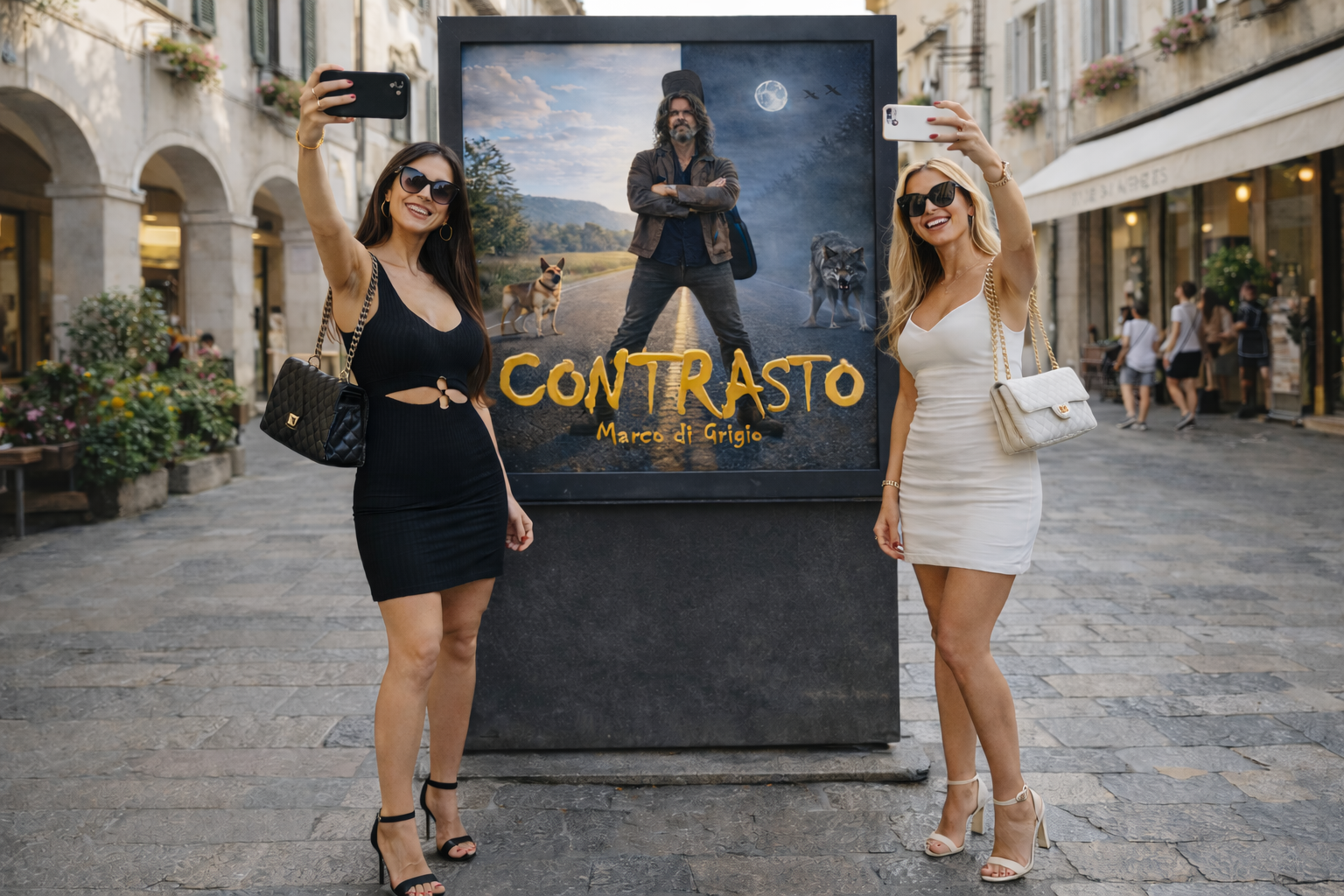
--> NUOVO ALBUM <--
Aprile 2026
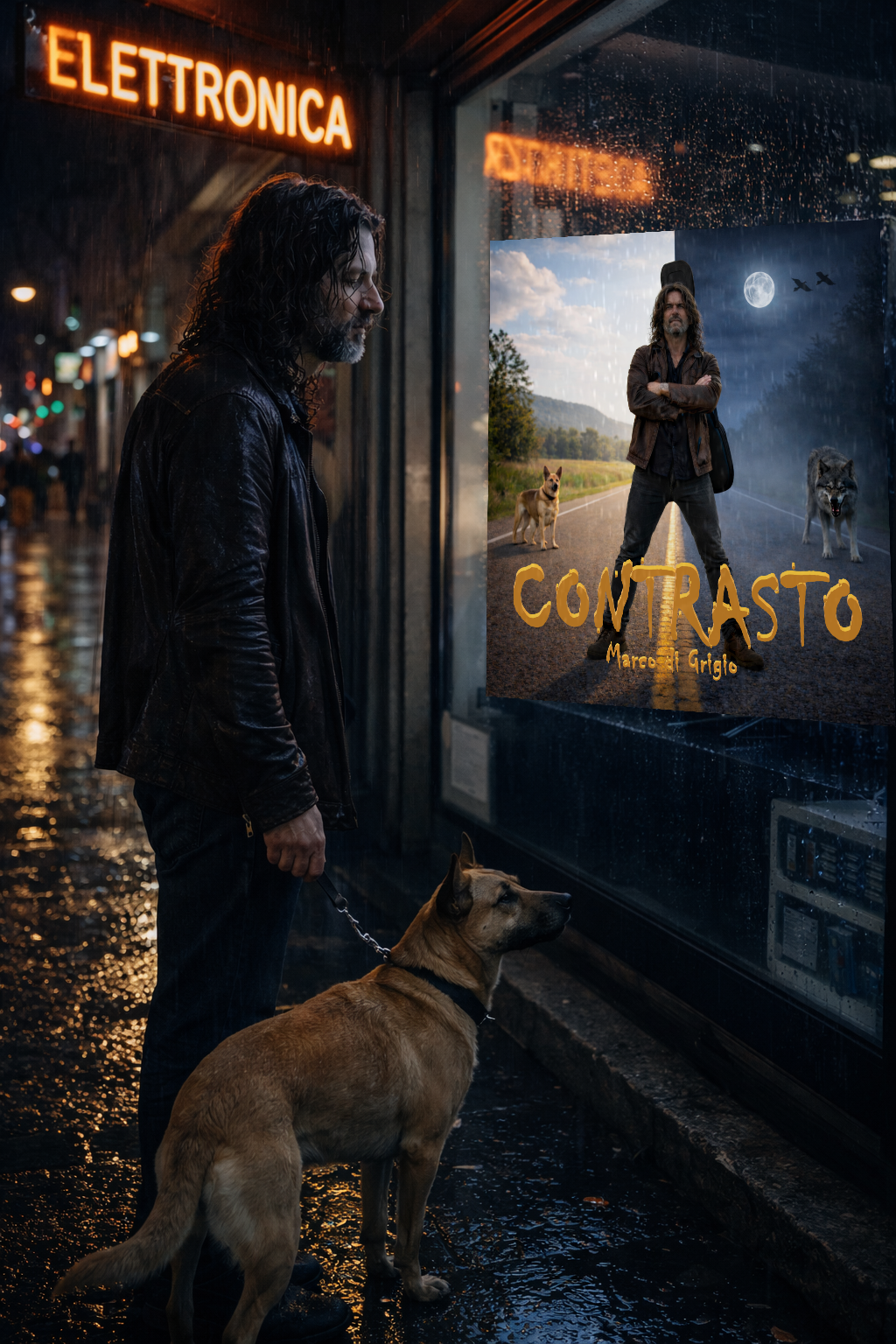
Questo album è più blues e più rock: più pesante, più energico.
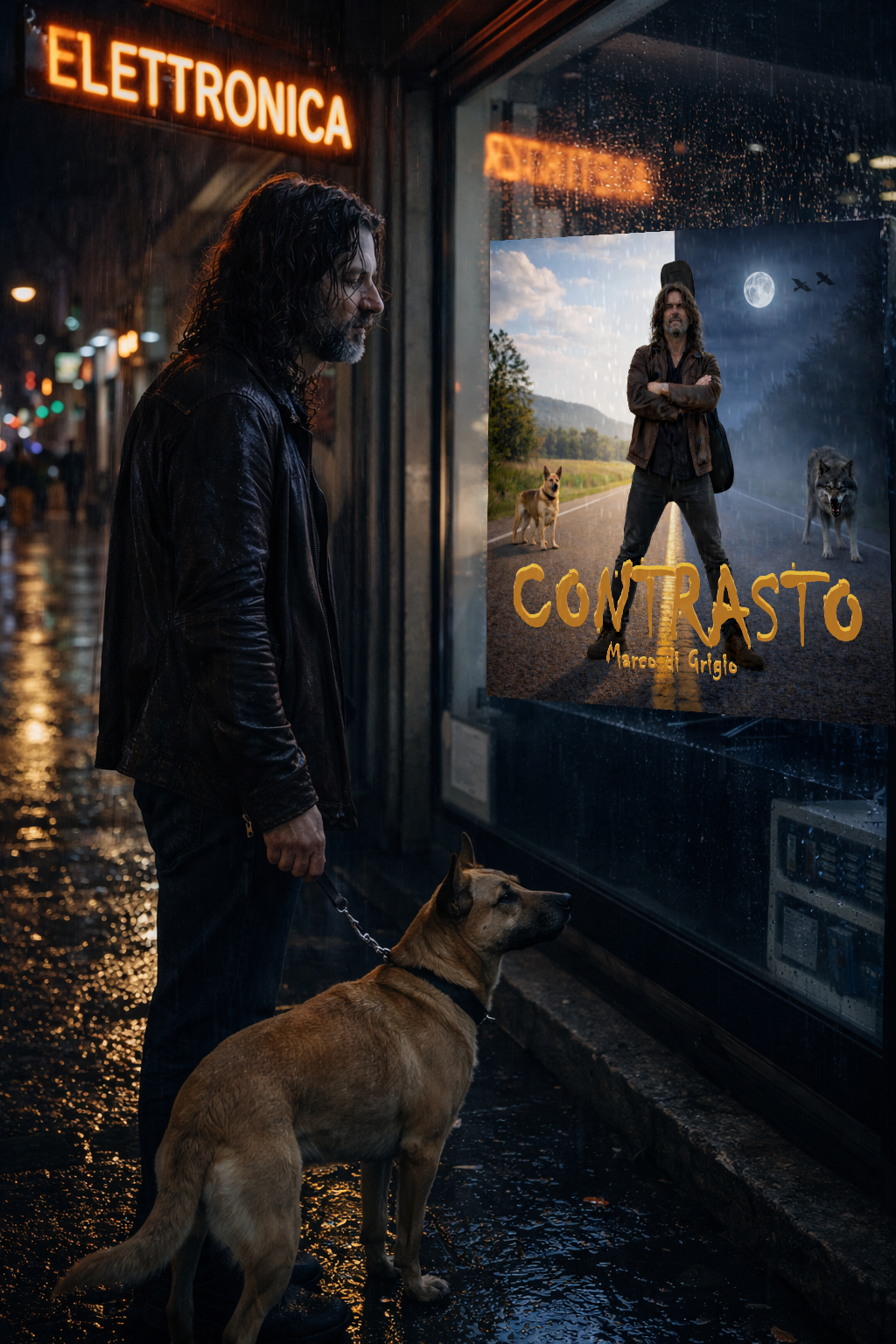
"CONTRASTO"
-
Contrasto 100%
-
Sulla strada... 100%
-
È un'altra ragione... 100%
-
Scarabeo 100%
-
Perché sono solo? 100%
-
Universo! (Blues Versione Notturna) 100%
-
La felicità fa paura! 45%
-
NZEMI 10%
CONTRASTO è un album blues-rock più pesante e più energico, come un cielo che non diventa buio, ma cambia tono all’improvviso. Come un cielo splendente che resta nella stessa luce eppure si oscura, perché un silenzio invisibile se ne impossessa. Sono canzoni come scene che non urlano, ma restano: luce d’estate sulla pelle salata, risate di bambini vicino all’acqua, bicchieri che brillano al sole. E poi, senza avviso, all’orizzonte appare il ferro nel blu. Nessun grido. Solo un silenzio che sposta tutto. La vicinanza diventa protezione. Lo sguardo impara a non tornare indietro. Questo album racconta il lento inclinarsi del mondo, le cose che rimangono quando qualcuno sparisce, e le parole che diventano azioni nel momento in cui le posi. Racconta una libertà che può costare solitudine, un dubbio che non si spezza ma sostiene, e una felicità che fa paura perché senti quanto la ami. E, sempre, l’amore: non come spettacolo, ma come brace che resiste. Alla fine il mare resta lo stesso. Ma dentro di noi qualcosa si è spostato.
CONTRASTO ist ein schwereres und energischeres Blues-Rock-Album, wie ein Himmel, der nicht dunkel wird, sondern plötzlich den Ton ändert. Wie ein strahlender Himmel, der im selben Licht bleibt und dennoch verdunkelt, weil das unsichtbare Schweigen ihn in Besitz nimmt. Es sind Lieder wie Szenen, die nicht schreien, aber bleiben: Sommerlicht auf salziger Haut, Kinderlachen am Wasser, Gläser im Sonnenfunkeln. Und dann, ohne Vorwarnung, steht am Horizont Eisen im Blau. Kein Aufschrei. Nur eine Stille, die alles verschiebt. Nähe wird Schutz. Der Blick lernt, nicht mehr zurückzukönnen. Dieses Album erzählt vom leisen Kippen der Welt, von Dingen, die zurückbleiben, wenn Menschen verschwinden, und von Worten, die zu Taten werden, sobald man sie gelegt hat. Es erzählt von Freiheit, die Einsamkeit kosten kann, von Zweifel, der nicht zerbricht, sondern trägt, und von einem Glück, das Angst macht, weil man spürt, wie viel man daran liebt. Und immer wieder von Liebe: nicht als Bühne, sondern als Glut, die hält.
CONTRASTO is a heavier, more energetic blues-rock album, like a sky that doesn’t turn dark, but suddenly changes its tone. Like a shining sky that stays in the same light, yet still darkens, because an invisible silence takes possession of it. These songs are scenes that don’t scream, but they stay: summer light on salt-stung skin, children laughing by the water, glasses catching the sun. And then, without warning, iron appears on the blue horizon. No shouting. Just a silence that shifts everything. Closeness becomes protection. Your gaze learns it can’t go back. This album tells of the world tilting quietly, of what remains when someone disappears, and of words that turn into actions the moment you place them. It tells of freedom that can cost you loneliness, of doubt that doesn’t break you, but holds you up, and of a happiness that feels frightening because you can feel how much you love it. And always, love: not as spectacle, but as embers that endure. In the end, the sea stays the same. But something inside us has moved.
Contrasto
Comincia come un normale giorno d’estate: luce calda, pelle salata, risate nell’aria. I bambini corrono vicino all’acqua, i bicchieri brillano, tutto sembra leggero. La pace pare scontata. Poi alzi lo sguardo verso l’orizzonte. Navi da guerra. Linee scure e silenziose nel blu. Si muovono appena, eppure cambiano tutto. I genitori chiamano i figli più vicini. Le mani cercano altre mani. I telefoni si alzano, come per fermare ciò che non si vuole capire. Nessuno urla. Proprio per questo pesa: quel silenzio che schiaccia, che scende sul posto. CONTRASTO è l’istante in cui gioia e pace restano, ma non sono più innocenti. Una canzone sul mondo che cambia tono senza rumore, sulla vicinanza che diventa protezione, e su uno sguardo che non torna indietro. Il mare è lo stesso. Ma dentro di noi qualcosa si sposta.
Es beginnt wie ein gewöhnlicher Sommertag: warmes Licht, salzige Haut, Lachen in der Luft. Kinder rennen am Wasser, Gläser klirren, alles wirkt leicht. Frieden fühlt sich selbstverständlich an. Dann hebst du den Blick zum Horizont. Kriegsschiffe. Dunkle, lautlose Linien im Blau. Sie bewegen sich kaum und doch verändert sich alles. Eltern rufen ihre Kinder näher. Hände greifen nach Händen. Handys werden gezückt, als müsste man festhalten, was man nicht begreifen will. Niemand schreit. Gerade das macht es schwer: diese drückende Stille, die sich über den Ort legt. CONTRASTO ist der Moment, in dem Freude und Frieden noch da sind, aber nicht mehr unschuldig. Ein Lied über das leise Kippen der Welt, über Nähe, die plötzlich Schutz bedeutet, und über den Blick, der nicht mehr zurück kann. Am Ende bleibt das Meer dasselbe. Doch in uns ist etwas verschoben.
It starts like an ordinary summer day: warm light, salt on your skin, laughter in the air. Kids run by the water, glasses catch the sun, everything feels weightless. Peace seems automatic. Then you look up at the horizon. Warships. Dark, silent lines in the blue. They barely move, yet they change everything. Parents call their children closer. Hands reach for hands. Phones rise, as if a picture could hold what the mind refuses to accept. No one screams. That’s why it hits: the crushing quiet that settles over the place. CONTRASTO is the moment when joy and peace are still there, but no longer innocent. A song about the world shifting tone without a sound, about closeness turning into protection, and about a gaze that can’t go back. The sea stays the same. But something inside us moves.
Sulla strada...
Ho visto spesso lei nella vita di ogni giorno: un cenno leggero, un volto buono, né amica né estranea. Poi, all’improvviso, è sparita. La strada era la stessa, ma il silenzio più profondo, e il mondo ha continuato come se nulla fosse. Lì c’era un container grigio, sul bordo della strada, pieno di ciò che un tempo era “tutto”: foto senza nomi, album aperti, mobili stanchi, anni chiusi nei cassetti. Un’intera vita lasciata in cose che nessuno viene più a cercare. Che cosa resta, quando il mattino non ha più un nome da chiamare? Più tardi se ne parlò, come sempre troppo tardi: del marito che si è spento lentamente, e del figlio perso negli anni Novanta, in un incidente. La casa è rimasta vuota, il peso è rimasto. Lei lo portava in silenzio, senza lamentarsi, camminando piano perché nessuno lo sentisse. Nessuno vedeva quanto teneva dentro, perché sorrideva.
Sono passato con un nodo in gola, come se per un attimo il tempo si fermasse. Non resta ciò che butti, né ciò che puoi contare. Resta lo sguardo, quando ti fermi e guardi.
Come sarà il futuro? Che cosa resterà di me e del mio amore…?
Ich sah sie oft im Alltag: ein leichtes Nicken, ein gutes Gesicht, nicht Freundin, nicht Fremde. Dann fehlte sie plötzlich. Die Straße blieb dieselbe, doch die Stille wurde tiefer, und die Welt ging weiter, als wäre nichts geschehen. Da stand ein grauer Container am Rand der Straße, gefüllt mit dem, was einmal „alles“ gewesen war: Fotos ohne Namen, aufgeschlagene Alben, müde Möbel, Jahre in Schubladen. Ein ganzes Leben, zurückgelassen in Dingen, die niemand mehr sucht. Was bleibt, wenn der Morgen keinen Namen mehr hat, den er rufen kann? Später sprach man darüber, wie immer zu spät: vom Mann, der langsam erlosch, und vom Sohn, der in den Neunzigern bei einem Unfall verloren ging. Das Haus wurde leer, die Last blieb. Sie trug sie still, ohne zu klagen, ging leise, damit niemand sie spürte. Niemand sah, wie viel sie in sich hielt, weil sie lächelte. Ich ging vorbei mit einem Knoten im Hals, als hielte die Zeit für einen Moment an. Nicht das bleibt, was man wegwirft oder zählen kann. Es bleibt der Blick, wenn man stehen bleibt und hinsieht.
Wie wird die Zukunft? Was bleibt von mir und meiner Liebe…?
I used to see her in everyday life: a small nod, a kind face, neither friend nor stranger. Then, suddenly, she was gone. The street was the same, but the silence was deeper, and the world moved on as if nothing had happened. There was a gray container by the roadside, filled with what once was “everything”: nameless photos, open albums, tired furniture, years shut away in drawers. A whole life left behind in things no one comes back to claim. What remains when morning has no name left to call? Later people spoke of it, as always too late: a husband who slowly faded, and a son lost in the nineties, in an accident. The house fell quiet, the weight remained. She carried it in silence, without complaint, walking softly so no one would feel it. No one saw how much she held inside, because she smiled. I walked past with a knot in my throat, as if time paused for a moment. What remains is not what you throw away, nor what you can count. What remains is the look, when you stop and really see. What will the future be? What will remain of me and my love…?
È un'altra ragione
Marco è fermo sul bordo della strada. La vecchia Fiat tace, il motore è freddo. All’ombra del grande ulivo il cane è disteso, tranquillo, come se sapesse che questo momento non va disturbato. Erba secca, opuntie, polvere. Sud Italia. Nessun rumore. Nessuna meta. Marco prende appunti. Non per ambizione. Non per vanità. Ma perché è adesso. Adesso deve nascere questa canzone. Non più tardi. Non un giorno qualunque. Adesso. L’amore per sua moglie Lia brucia dentro di lui. Silenzioso, profondo, senza grandi gesti. Un amore semplice, che non vuole scena, non vuole spiegazioni. Proprio per questo è forte. Regge. Resta. Spinge. Il futuro deve saperlo. Non per impressionare, ma per ricordare. Perché si sappia che è possibile. Che l’amore non svanisce solo perché si continua a camminare. Che si può amare per sempre, se si ha il coraggio di fissarlo. Amare per sempre? Sì. Sì. E ancora sì. Lia ci sorriderebbe. Forse farebbe un gesto per minimizzare. Lei non ha bisogno di parole. Ma Marco scrive. Perché qualcuno deve scrivere, quando qualcosa deve restare. Perché non ogni amore è rumoroso, ma ogni amore vero lascia una traccia. Non scrive contro il tempo. Scrive dentro il tempo.
Marco sitzt am Straßenrand. Der alte Fiat schweigt, der Motor ist kalt. Im Schatten des Olivenbaums liegt der Hund, ruhig, als würde er wissen, dass man diesen Moment nicht stören darf. Getrocknetes Gras, Opuntien, Staub. Süditalien. Kein Lärm. Kein Ziel. Marco macht sich Notizen. Nicht aus Ehrgeiz. Nicht aus Eitelkeit. Sondern weil es jetzt ist. Jetzt muss dieses Lied geschrieben werden. Nicht später. Nicht irgendwann. Jetzt. Die Liebe zu seiner Frau Lia brennt in ihm. Still, tief, ohne große Gesten. Eine bescheidene Liebe, die kein Aufheben will, keine Bühne, keine Erklärungen. Aber gerade deshalb ist sie stark. Sie hält. Sie bleibt. Sie drängt. Die Zukunft muss davon erfahren. Nicht um zu beeindrucken, sondern um zu erinnern. Damit man weiß, dass es möglich ist. Dass Liebe nicht vergeht, wenn man weitergeht. Dass man ewig lieben kann, wenn man den Mut hat, es festzuhalten. Ewig diese Liebe? Ja. Ja. Und nochmals ja. Lia würde darüber lächeln. Vielleicht abwinken. Sie braucht keine Worte dafür. Aber Marco schreibt. Weil jemand schreiben muss, wenn etwas bleiben soll. Weil nicht jede Liebe laut ist, aber jede wahre Liebe eine Spur hinterlässt. Er schreibt nicht gegen die Zeit. Er schreibt in sie hinein.
Marco is pulled over at the roadside. The old Fiat is silent, the engine cold. In the shade of the big olive tree, the dog lies down, calm, as if it knows this moment must not be disturbed. Dry grass, prickly pears, dust. Southern Italy. No noise. No destination. Marco takes notes. Not out of ambition. Not out of vanity. But because it’s now. Now this song has to be written. Not later. Not someday. Now. His love for his wife, Lia, burns inside him. Quiet, deep, without grand gestures. A modest love that wants no spotlight, no explanations. That’s exactly why it’s strong. It holds. It stays. It pushes. The future has to know about it. Not to impress, but to remember. So people can see it’s possible. That love doesn’t vanish just because you keep walking. That you can love forever, if you have the courage to carve it in. Love forever? Yes. Yes. And yes again. Lia would smile at it. Maybe wave it off. She doesn’t need words for it. But Marco writes. Because someone has to write when something is meant to remain. Because not every love is loud, but every true love leaves a trace. He isn’t writing against time. He’s writing into time.
Scarabeo
A mezzogiorno, al mercato. La gente si china su un tavolo piccolo, lettere di legno, mani che esitano. Ognuno vuole vincere, ma quasi nessuno si accorge che qui si gioca più di un gioco. Tra le voci, i passi e l’odore del caffè, sul tavolo resta qualcosa di aperto. Uno specchio. Scarabeo è un gioco dove si posano parole. Ed è proprio lì che sta la sua verità: una volta messe, restano. Non le riprendi, non le cancelli, non le rimetti a posto. Il tabellone si riempie e lo spazio si stringe. Come il tempo. All’inizio c’è posto. Come quando sei giovane. Ogni possibilità sembra aperta, ogni scelta leggera. Ma parola dopo parola il campo cambia. Nel gioco, sì, ma anche nella vita. Le parole non sono decorazione. Sono azioni. Costruiscono, feriscono, legano, dividono. E non tornano indietro. In un bar, a un tavolo qualsiasi, qualcuno guarda. Una donna stringe la borsa. Un uomo anziano conta piano. Un ragazzo ride, perché non sa ancora quanto può pesare una parola. Ognuno si riconosce da qualche parte, senza dirlo. Perché il gioco non spiega. Mostra. Con gli anni lo spazio diventa poco. Molte parole sono già state dette. Alcune le vorresti posare in modo diverso. Ma il tabellone non dimentica. Ricorda. E proprio lì nasce la domanda che resta quando il rumore cala e il gioco rallenta: lo rifaresti, nello stesso modo? Scarabeo non è una canzone sul vincere o sul perdere. È una canzone sulla responsabilità. Sulle scelte che iniziano piano e restano a lungo. Sulle parole che valgono come gesti. Su una vita che non si riscrive, si guarda. Alla fine il tavolo rimane fermo. Le mani sono stanche. Le parole restano. Scarabeo. Come uno specchio sul tavolo.
Mittags am Markt. Menschen beugen sich über ein kleines Brett, Buchstaben aus Holz, Hände, die zögern. Jeder will gewinnen, doch niemand merkt, dass hier mehr gespielt wird als ein Spiel. Zwischen Stimmen, Schritten und Kaffeeduft liegt etwas Offenes auf dem Tisch. Ein Spiegel. Scarabeo ist ein Spiel, bei dem man Wörter legt. Und genau darin liegt seine Wahrheit: Einmal gelegt, bleiben sie. Man kann sie nicht zurücknehmen, nicht ausradieren, nicht neu sortieren. Das Brett füllt sich, der Raum wird enger. So wie die Zeit. Am Anfang ist Platz. Wie in jungen Jahren. Jede Möglichkeit scheint offen, jede Entscheidung leicht. Doch mit jedem Wort, das gelegt wird, verändert sich das Feld. Nicht nur im Spiel, auch im Leben. Worte sind keine Dekoration. Sie sind Handlungen. Sie bauen, sie verletzen, sie binden, sie trennen. Und sie kehren nicht zurück. In einem Café, an einem kleinen Tisch, schaut jemand zu. Eine Frau hält ihre Tasche fest. Ein alter Mann zählt leise. Ein Junge lacht, weil er noch nicht weiß, wie schwer ein Wort sein kann. Jeder erkennt sich irgendwo wieder, ohne dass es jemand ausspricht. Denn das Spiel erklärt nichts. Es zeigt nur. Mit den Jahren wird der Platz knapper. Viele Wörter sind schon gesagt. Manche hätte man gern anders gelegt. Doch das Brett verzeiht nicht. Es erinnert. Und genau dort entsteht die Frage, die bleibt, wenn das Spiel langsam endet und das Geräusch verstummt: Würdest du es noch einmal genauso machen? Scarabeo ist kein Lied über Gewinnen oder Verlieren. Es ist ein Lied über Verantwortung. Über Entscheidungen, die leise beginnen und lange nachhallen. Über Worte, die wie Taten wirken. Über ein Leben, das sich nicht neu schreiben lässt, sondern nur lesen. Am Ende liegt das Brett still da. Die Hände sind müde. Die Wörter bleiben.
Scarabeo. Wie ein Spiegel auf dem Tisch.
Noon at the market. People lean over a small board, wooden letters, hands that hesitate. Everyone wants to win, yet almost no one notices they’re playing more than a game. Between voices, footsteps, and the smell of coffee, something stays open on the table. A mirror. Scarabeo is a game where you place words. And that’s exactly where its truth lives: once you lay them down, they stay. You don’t take them back, you don’t erase them, you don’t rearrange them. The board fills up and the space grows tight. Like time. At first there’s room. Like in youth. Every possibility feels open, every choice feels light. But word by word the field changes. In the game, yes, and in life too. Words aren’t decoration. They’re actions. They build, they wound, they bind, they split. And they don’t come back. In a café, at an ordinary table, someone watches. A woman grips her bag. An older man counts softly. A boy laughs, because he still doesn’t know how heavy a word can be. Everyone recognizes themselves somewhere, without saying it. Because the game doesn’t explain. It shows. As the years pass, space becomes scarce. So many words have already been spoken. Some you wish you’d placed differently. But the board doesn’t forget. It remembers. And that’s where the question is born, the one that remains when the noise fades and the game slows down: would you do it the same way again? Scarabeo isn’t a song about winning or losing. It’s a song about responsibility. About choices that start quietly and echo for a long time. About words that count like deeds. About a life you can’t rewrite, only look at. In the end the board lies still. Hands grow tired. The words remain.
Scarabeo. Like a mirror on the table.
Perché sono solo?
PERCHÉ SONO SOLO? racconta un viaggio che doveva essere libertà e invece pesa come una ferita silenziosa. Lui è partito perché lo voleva davvero. E lei lo ha lasciato andare per amore, senza trattenerlo. Proprio lì nasce il dolore: ottiene il suo desiderio, ma perde la presenza che lo rendeva intero. Dentro di lui convivono luce e buio, nostalgia e libertà. Non come una guerra, ma come un continuo mancarsi. Ogni passo avanti apre spazio, ma scava anche un vuoto. La domanda non esplode: sussurra. Perché dovevo partire? Perché sono solo? Perché mi tormenta ciò che ho scelto io? Il ritornello stringe tutto in una sola frase, come un mantra: “PARTIRE, CAPIRE, SENTIRE… E PERDERTI.” Sax, basso e chitarra distorta portano questo dolore quieto: grande nel suono, intimo nel cuore.
PERCHÉ SONO SOLO? erzählt von einer Reise, die eigentlich Freiheit sein sollte, aber sich wie ein stilles Gewicht anfühlt. Er ist gegangen, weil er es wollte. Und sie hat ihn gehen lassen, weil sie ihn liebt. Genau darin liegt der Schmerz: Er bekommt seinen Wunsch, doch verliert die Nähe, die ihn ganz gemacht hat. Im Song treffen zwei Zustände in ihm aufeinander: Licht und Dunkelheit, Sehnsucht und Freiheit. Nicht als Kampf, sondern als gegenseitiges Vermissen. Jeder Schritt nach vorn öffnet den Raum, aber schneidet zugleich eine Lücke in sein Inneres. Er fragt nicht dramatisch, sondern leise, fast flüsternd: Warum musste ich los? Warum bin ich allein? Warum quält mich das, was ich selbst gewählt habe? Der Refrain verdichtet alles in eine einzige Zeile, die wie ein Mantra zurückkehrt: „PARTIRE, CAPIRE, SENTIRE… E PERDERTI.“ Gehen, verstehen, fühlen… und dich verlieren. Saxophon, Bass und verzerrte Gitarre tragen dieses stille Leiden wie eine dunkle Brandung: groß im Klang, aber intim im Herz.
PERCHÉ SONO SOLO? is a journey that was meant to feel like freedom, but lands like a quiet wound. He left because he truly wanted to. And she let him go out of love, without holding him back. That is where the pain begins: he gets his wish, yet loses the closeness that made him whole. Inside him, light and darkness coexist, longing and freedom side by side. Not as a battle, but as two states that keep missing each other. Every step forward creates space, and carves a hollow at the same time. The question never bursts, it whispers: Why did I have to go? Why am I alone? Why does my own choice torment me now? The chorus compresses everything into one line, repeated like a spell: “PARTIRE, CAPIRE, SENTIRE… E PERDERTI.” Saxophone, bass, and distorted guitar carry this silent suffering: huge in sound, intimate at its core.
Universo! (Blues Versione Notturna)
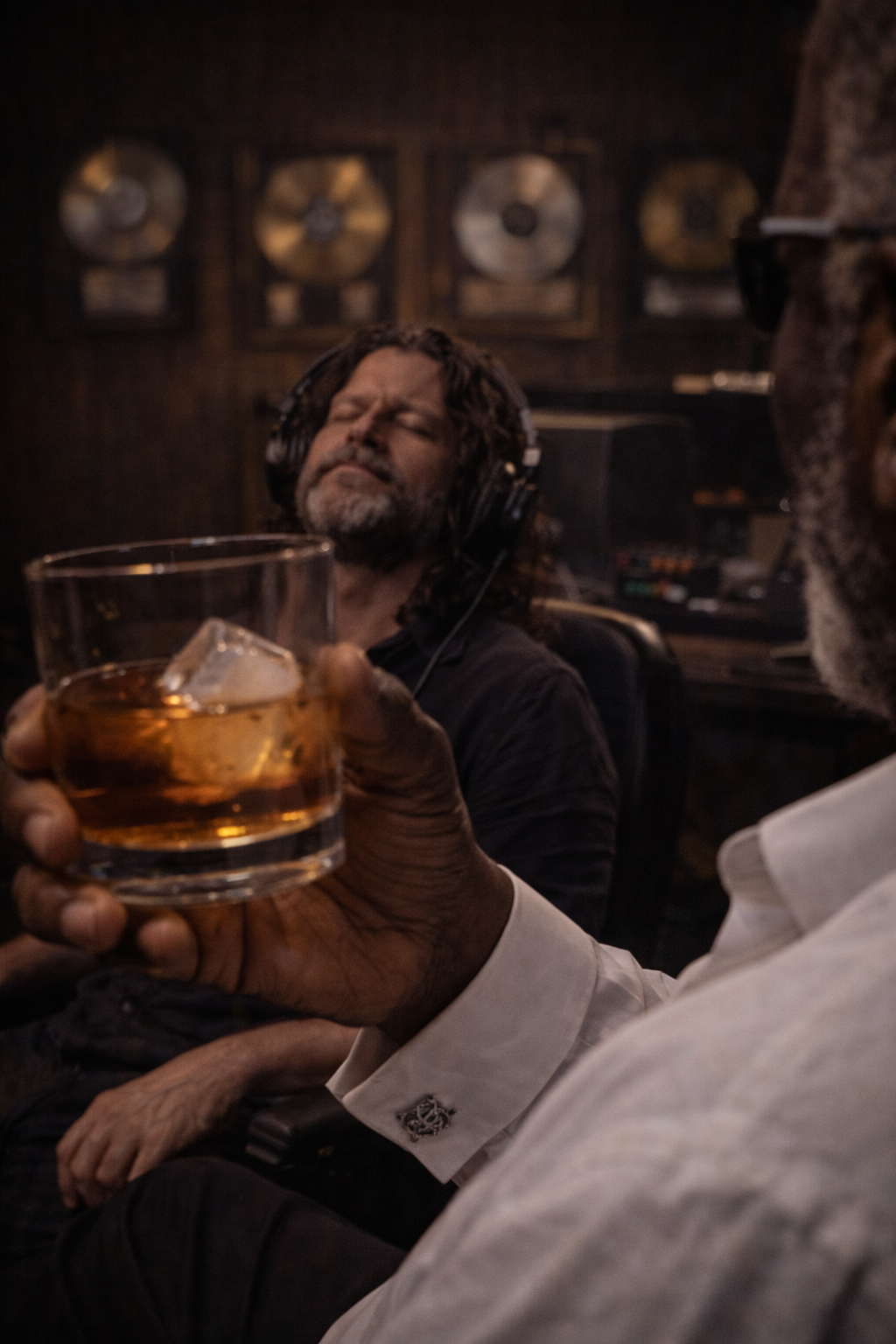
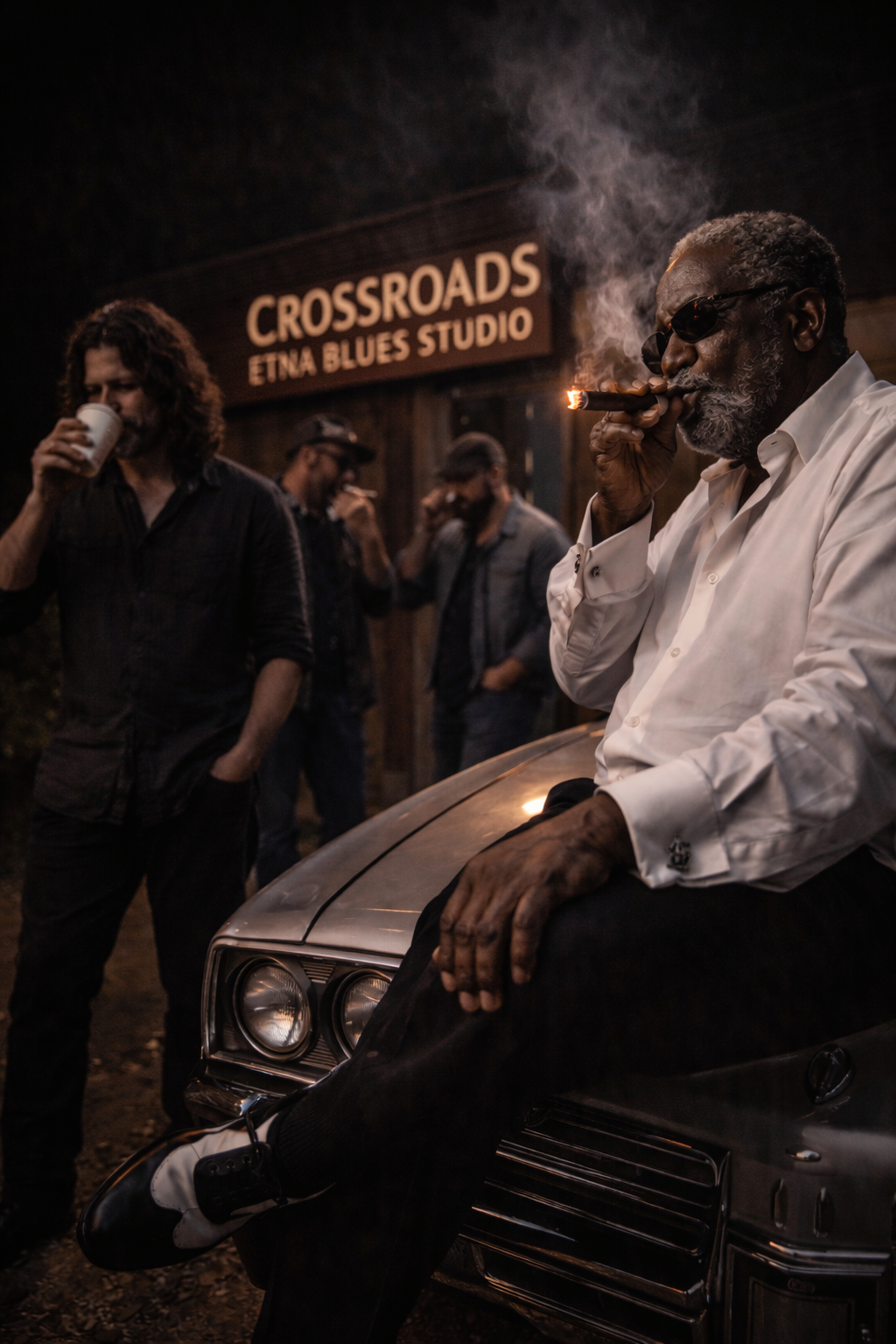
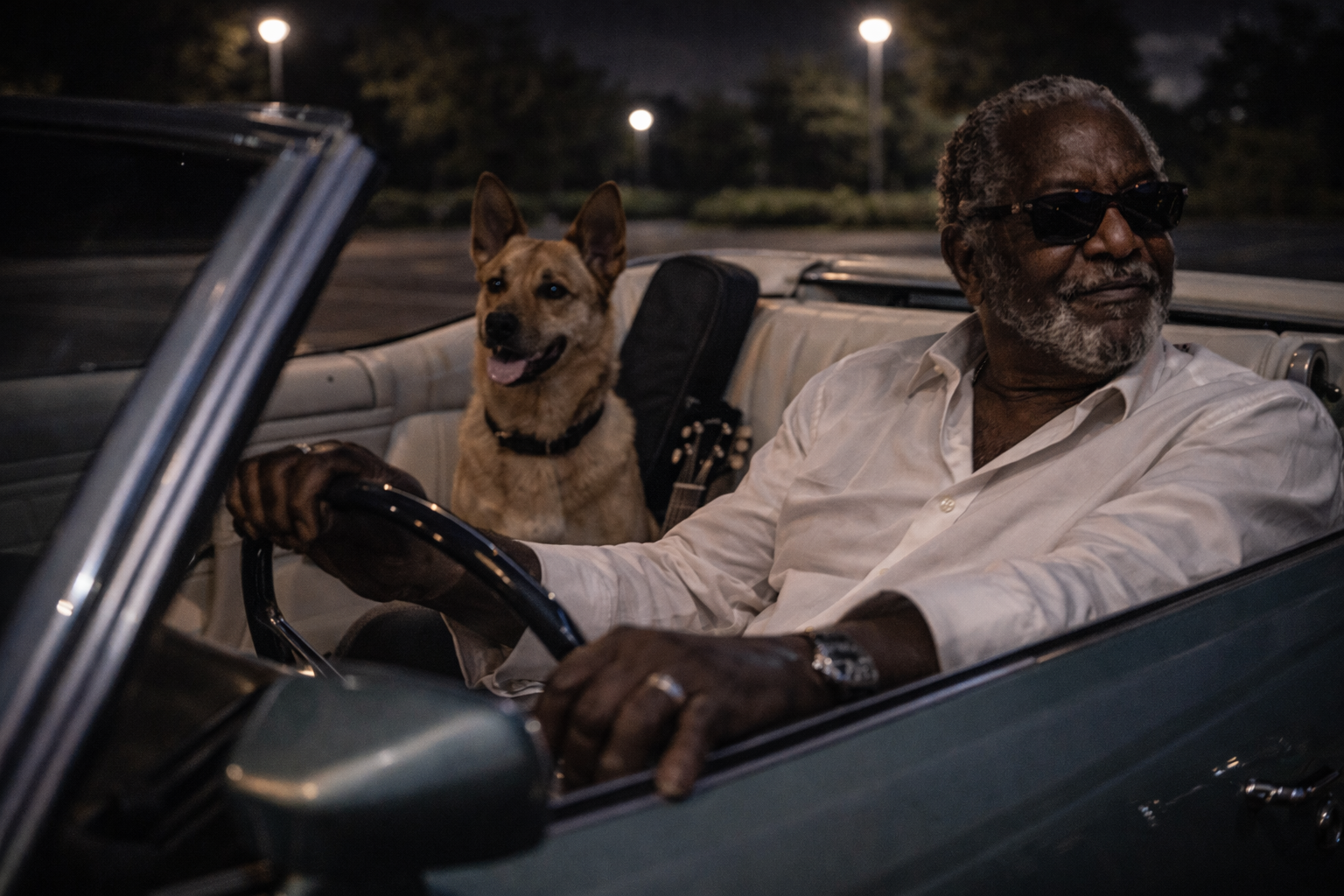
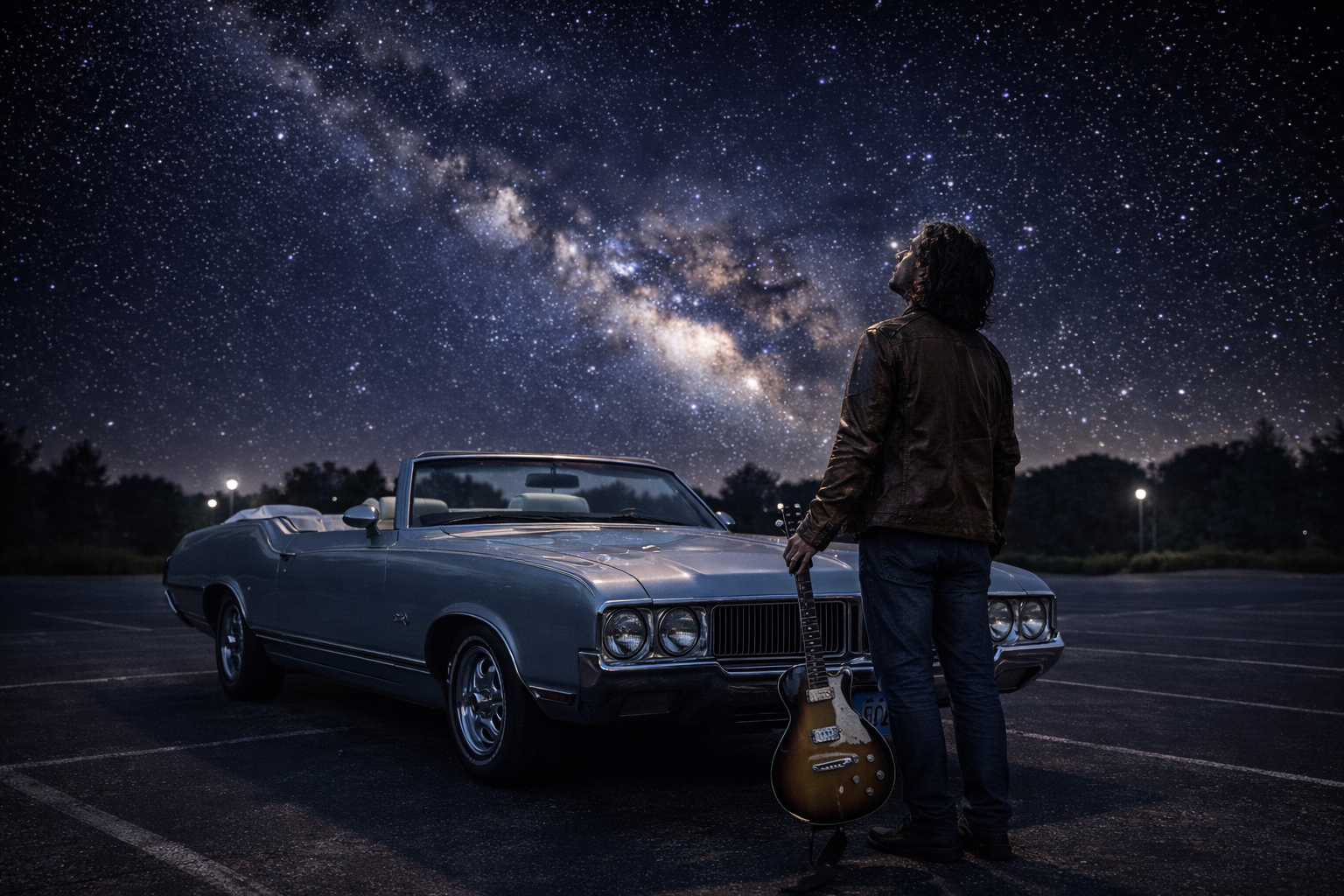
Universo è una canzone sul dubbio che non spezza, ma sostiene. Non è il dubbio sull’amore dell’altro, è il dubbio sul proprio diritto a riceverlo. Un uomo ama, ma si conosce abbastanza da non credere subito che quel sentimento sia davvero “per lui”. Non mette in discussione l’amore. Mette in discussione se stesso. La scena è notturna. Un parcheggio, asfalto silenzioso, e sopra un universo così limpido da sembrare senza segreti. Un Oldsmobile cabrio aperto aspetta come un frammento di strada antica, quando la musica sapeva di polvere, chilometri e verità. Al volante c’è Isaak Nightwolf Jr., una leggenda del blues. Uno che ha più notti che giorni nelle ossa. Il sigaro brucia piano, il fumo sale e si perde tra le stelle. Isaak parla poco. Non ne ha bisogno. La sua presenza basta: non per salvare, ma per tenere insieme. È la prova che si può andare avanti anche con le cicatrici.
Marco è fuori dall’auto, accanto alla portiera. La pausa è sua. Guarda l’universo come se lassù ci fosse una risposta. E c’è: una stella più luminosa delle altre. Ferma. Ostinata. Non chiama, non ordina. Semplicemente resta. Forse è il suo mio astro. Forse è un nome che non si dice ad alta voce. Forse LIA. Il movimento nella canzone non è fuga. È ciò che il blues conosce bene: fermarsi, respirare, poi ripartire. Passo dopo passo, senza promesse. Con una sola decisione: non spegnere il motore. Qui l’universo non è un dio e non è un giudice. È lo spazio sopra ogni dubbio. Un luogo in cui l’amore può avere senso, anche quando non lo si capisce fino in fondo.
Mio astro parla di fiducia senza garanzia. Dell’amore come scelta quotidiana. E di quel momento in cui basta stare vicino a una leggenda, per ricordarsi che non è troppo tardi. Si è ancora in viaggio.
UNIVERSO ist ein Lied über Zweifel, der nicht zerbricht, sondern trägt. Nicht der Zweifel an der Liebe, sondern der Zweifel an der eigenen Berechtigung. Ein Mann liebt, aber kennt sich selbst gut genug, um nicht sofort zu glauben, dass dieses Gefühl wirklich für ihn gedacht ist. Er stellt die Liebe nicht infrage. Er stellt sich selbst infrage. Die Szene gehört der Nacht. Ein Parkplatz, stiller Asphalt, darüber ein Universum so klar, als hätte der Himmel beschlossen, nichts zu verbergen. Ein offenes Oldsmobile-Cabrio steht da wie ein Relikt aus einer Zeit, in der Musik noch Staub, Straße und Wahrheit war. Am Steuer sitzt Isaak Nightwolf Jr., eine Blues-Legende. Einer, der mehr Nächte als Tage kennt. Die Zigarre glimmt ruhig, der Rauch steigt langsam auf und verliert sich zwischen den Sternen. Isaak redet nicht viel. Er muss es nicht. Seine Präsenz allein hält die Dinge zusammen. Kein Retter, kein Lehrer. Eher der Beweis, dass man mit Narben weiterfahren kann. Marco steht neben dem Wagen. Die Pause gehört ihm. Er schaut ins Universum, als läge dort oben eine Antwort. Und vielleicht ist sie da: ein Stern, heller als die anderen. Still. Beständig. Kein Ruf, kein Befehl. Nur Licht. Vielleicht ist es sein mio astro. Vielleicht ein Name, den man nicht laut sagt. Vielleicht LIA. Die Bewegung im Lied ist keine Flucht. Es ist das, was der Blues kennt: stehen bleiben, atmen, dann weiterrollen. Schritt für Schritt, ohne Versprechen. Mit der Entscheidung, den Motor nicht abzustellen. Das Universum ist hier kein Gott und kein Richter. Es ist der Raum über allem Zweifel. Ein Ort, in dem Liebe Sinn haben darf, auch wenn man sie noch nicht vollständig versteht. UNIVERSO / MIO ASTRO handelt von Vertrauen ohne Garantie. Von Liebe als täglicher Entscheidung. Und davon, dass es manchmal reicht, neben einer Legende zu stehen, die einem wortlos zeigt: Du bist nicht zu spät. Du bist noch unterwegs.
Universo is a song about doubt that doesn’t break you, it holds you up. Not doubt about someone else’s love, but doubt about your own right to receive it. A man loves, yet knows himself well enough not to believe immediately that this feeling is truly meant for him. He doesn’t question the love. He questions himself. The scene belongs to the night. A parking lot, quiet asphalt, and above it an universe so clear it feels like nothing is hidden. An open Oldsmobile convertible waits like a relic of the road, from a time when music tasted of dust, miles, and truth. Behind the wheel sits Isaak Nightwolf Jr., a blues legend. Someone with more nights than days in his bones. The cigar glows softly, the smoke rises and disappears into the stars. Isaak doesn’t say much. He doesn’t have to. His presence is enough, not to rescue, but to steady. Proof that you can keep driving even with scars. Marco stands outside the car, beside the door. The pause is his. He looks up at the universe as if the answer is written there. And it is: one star brighter than the rest. Still. Stubborn. It doesn’t call, it doesn’t command. It simply stays. Maybe it’s his mio astro. Maybe it’s a name you don’t speak out loud. Maybe LIA. The movement in the song isn’t escape. It’s what the blues knows well: stop, breathe, then roll on. Step by step, without promises. With one decision only: don’t kill the engine. The universe here is neither god nor judge. It’s the space above every doubt. A place where love is allowed to make sense, even when it isn’t fully understood.
Mio astro is about trust without guarantees. About love as a daily choice. And about that moment when standing near a legend is enough to remember: it’s not too late. You’re still on the road.
La felicità fa paura!
(Blues Versione Notturna)
“LA FELICITÀ FA PAURA” racconta una felicità semplice e preziosa: per esempio poter fare la spesa al mercato senza dover contare ogni centesimo. Il pane nel sacchetto, l’espresso bevuto in piedi, quel sorriso lieve perché lo sai: stasera si cucina, la famiglia si siede insieme, c’è buon cibo e ci sono quelle conversazioni che nascono solo quando nessuno deve lottare. Eppure, proprio in quel calore cade un pensiero come una goccia fredda: e se un giorno cambiasse tutto? E se ciò che sembra ovvio smettesse di esserlo? Se il mercato, l’abbondanza, la leggerezza, quel “oggi cuciniamo qualcosa di bello” diventassero all’improvviso fragili?
Il brano è gratitudine a cuore aperto, con lo sguardo in lontananza: non per trattenere la felicità, ma per vederla davvero finché c’è. E per capire che, a volte, la felicità fa paura perché si sente quanto la si ama.
„LA FELICITÀ FA PAURA“ erzählt von einem ganz einfachen, kostbaren Glück: wie zum Beispiel auf dem Markt einkaufen zu können, ohne auf jeden Cent achten zu müssen. Das Brot in der Tüte, der Espresso im Stehen, das leise Lächeln, weil man weiß: Heute Abend wird gekocht, die Familie sitzt zusammen, es gibt gutes Essen und diese Gespräche, die nur entstehen, wenn niemand kämpfen muss. Doch genau in diese Wärme fällt ein Gedanke wie ein kühler Tropfen: Was, wenn sich das einmal ändern sollte? Was, wenn das Selbstverständliche nicht mehr selbstverständlich ist? Wenn der Markt, die Fülle, die Leichtigkeit, dieses „Wir kochen heute etwas Schönes“ plötzlich brüchig werden? Der Song ist Dankbarkeit mit offenem Herzen und einem Blick in die Ferne: nicht um das Glück festzuhalten, sondern um es wirklich zu sehen, solange es da ist. Und um zu begreifen: Manchmal macht Glück Angst, weil man spürt, wie viel man daran liebt.
“LA FELICITÀ FA PAURA” tells of a simple, precious kind of happiness: being able to shop at the market without watching every single cent. Bread in the bag, an espresso taken standing at the counter, a quiet smile because you know: tonight there will be cooking, the family will sit together, there will be good food, and those conversations that only happen when nobody has to fight. But right into that warmth a thought drops like cool water: what if one day it changed? What if the ordinary stopped being ordinary? If the market, the abundance, the lightness, that “we’ll cook something nice tonight” suddenly turned brittle?
The song is gratitude with an open heart and a gaze set far ahead: not to cling to happiness, but to truly see it while it’s still there. And to understand that sometimes happiness is frightening, because you can feel how much you love it.
NZEMI!
???
???
???