

Immagini generate con l’IA. Persone e scene fittizie.
Pprimo album di Marco di Grigio.
Un viaggio fatto di suoni, storie e immagini che prendono forma, passo dopo passo.
--> POESIA PER LIA - TU SEI LUCE! <--

-
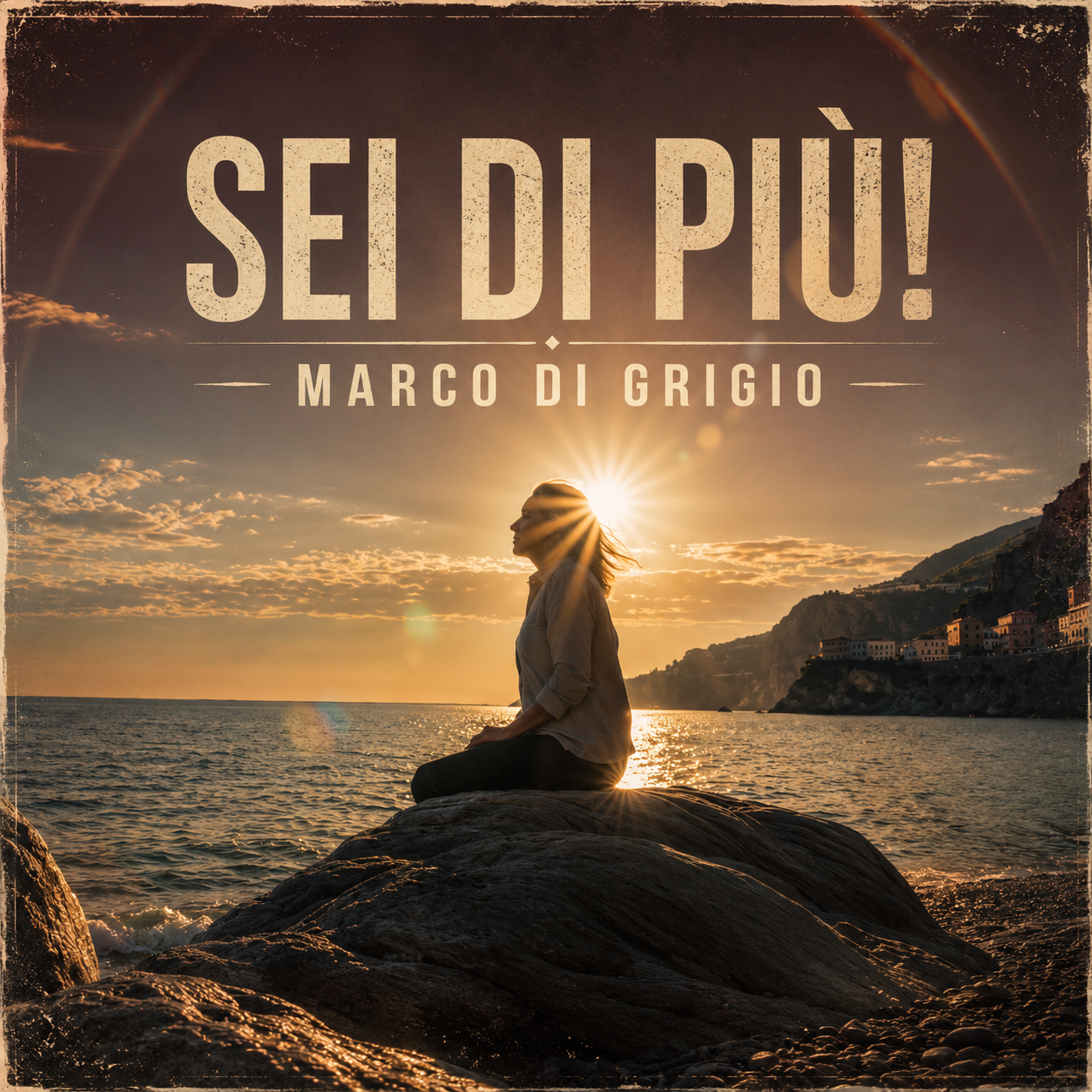
Sei di più!
-
Pellicola di noi
-
Fammi vìdiri u tò arcubalenu!
-
Sei tu!
-
Arricuòrdate e guàrda arrete!
-
Il mio mercato
-
Il mio mercato
-
Agrigento, anima mia!
-
I tuoi occhi, il tuo sorriso!
-
Tempo! Tempo!
POESIA PER LIA — il mio primo album italiano come MARCO DI GRIGIO.
Nasce da un luogo piccolo e immenso insieme: il punto in cui una vita incontra un’altra e capisce che non vuole più camminare da sola. Queste canzoni sono nate nel silenzio delle sere, tra ricordi che fanno bene e ferite che insegnano, e dentro un’unica luce che non mi ha mai lasciato: mia moglie Lia.
A lei è dedicato questo album. Perché è stata voce quando io non trovavo parole, calore quando il mondo sembrava freddo, e casa quando io ero lontano da me stesso. POESIA PER LIA è questo: poesia che si può cantare,
amore che non si consuma, ma diventa musica per restare. Se questi brani vi toccheranno, allora quel piccolo fuoco che li ha generati avrà trovato nuove notti da illuminare.
POESIA PER LIA — mein erstes italienisches Album als MARCO DI GRIGIO.
Es kommt aus einem Ort, der klein und unendlich zugleich ist: dort, wo ein Leben das andere berührt und plötzlich weiß, dass es nie mehr allein gehen will. Diese Lieder sind in stillen Abenden entstanden, zwischen Erinnerungen, die wärmen, und Wunden, die lehren, und aus einem einzigen Licht, das mich nie verlassen hat: meine Frau Lia.
Ihr ist dieses Album gewidmet. Weil sie Stimme war, wenn mir die Worte fehlten, Wärme, wenn die Welt kalt wurde, und Zuhause, wenn ich mir selbst fremd war. POESIA PER LIA ist genau das: Poesie, die man singen kann, Liebe, die nicht vergeht, sondern Musik wird, um zu bleiben.
Wenn euch diese Songs berühren, dann hat dieses kleine Feuer, aus dem sie kamen, eine neue Nacht gefunden, die es erhellen darf.
“SEI DI PIÙ!” - è una canzone intensa e consolatoria su una persona che porta dentro dolore, dubbi e ferite del passato. Il narratore vede la luce che ancora vive in lei e la invita a ricordare che è più delle sue cicatrici, dei suoi errori e delle ombre che la inseguono. Tra pianoforte delicato e sax caldo, il brano cresce fino a diventare una promessa di speranza: non sei la tua notte, sei vita, fuoco e forza capace di spezzare le catene. Alla fine resta una presenza vicina, dolce, e l’idea di un nuovo mattino che arriva.
Sei du! - „SEI DI PIÙ!“ ist ein tröstendes, emotionales Lied über einen Menschen, der unter Schmerz, Selbstzweifeln und alten Wunden leidet. Der Erzähler sieht die innere Stärke und das Licht in dieser Person und erinnert sie daran, dass sie mehr ist als ihre Narben, Fehler und ihr schweres Vergangenes. Zwischen zartem Piano und warmem Saxophon wächst die Botschaft zu einem hoffnungsvollen Gelöbnis: Du bist nicht deine Dunkelheit – du bist Leben, Feuer und die Kraft, dich zu befreien. Am Ende bleibt die stille Gewissheit von Nähe, Heilung und einem neuen Morgen.
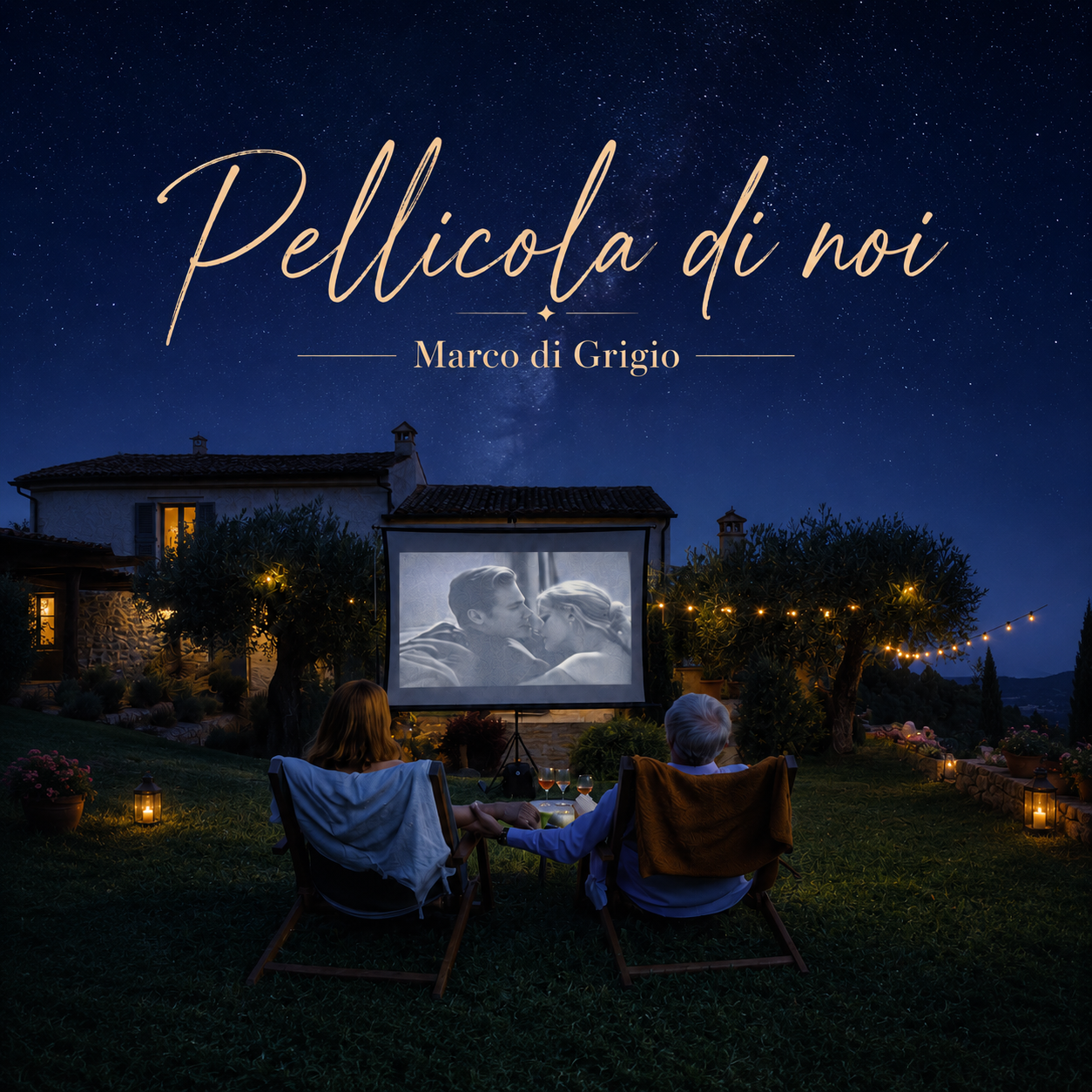
“Pellicola di noi” è come una sera insieme, quando guardiamo i vecchi film del nostro passato. Scorrono le scene, una dopo l’altra: un ballo d’estate, due bicchieri di vino rosso, rose sul davanzale, un disco che ancora suona uguale. E dentro ogni immagine torna quella domanda dolce: “TI RICORDI…?” La canzone non parla solo di memoria, ma di gratitudine. Dice piano: che bello che tu ci sia nella mia vita. Anche se il tempo va avanti e tutto cambia, il nostro “noi” resta lì, come una luce sotto ogni giorno vissuto. La bridge è un piccolo giuramento: continuare a camminare insieme, a sognare, ad amarci e a ritrovarci sempre. Alla fine “Pellicola di noi” è un brindisi caldo alla vita condivisa, ai prossimi anni — e alla verità che vive in tutte le nostre scene: finché ci siamo noi, la melodia non finisce mai.
Ein Film über uns - „Pellicola di noi“ - ist wie ein gemeinsamer Abend, an dem wir alte Filme aus unserer Vergangenheit ansehen. Szene für Szene tauchen kleine Momente wieder auf: ein Sommerball, zwei Gläser Rotwein, Rosen am Fenster, ein Lied, das immer noch genauso klingt. Und zwischen all diesen Bildern steht dieses leise Staunen: „Weißt du noch…?“ Das Lied feiert nicht nur Erinnerung, sondern Dankbarkeit. Es sagt: Schön, dass es dich gibt in meinem Leben. Auch wenn die Zeit weitergeht und sich vieles verändert, bleibt das „Wir“ als Herzschlag unter allem, was war und ist. Die Bridge fühlt sich an wie ein Versprechen, immer weiter gemeinsam zu gehen – zu träumen, zu lieben, zurückzukehren zueinander. Am Ende ist „Pellicola di noi“ ein warmes Anstoßen auf das gelebte Leben, auf die nächsten Jahre – und auf die Wahrheit, die in all unseren Bildern steckt: Solange wir uns haben, bleibt die Melodie.

“Fammi vìdiri u tò arcubalenu!” è ’n grida disperata di aiutu. ’N omu si trova ’nta nu munnu diventatu senza culura: nun canta cchiù nuddu aceddu, u suli è friddu, e ’n funnu c’è un tremulu funnu. Guerra e caos ’n ogni locu, li silenzi sunnu chî vuci sbagghiati. Nî notizzi si vidi u focu nê furesti, u mari chini di munnizza, e ’n delfinu ca lotta pi campà. A genti si sciarra, s’addàuna sulu pi l’egoismu, e a verità si fa minzogna. U cantanti nun ce la fa cchiù. Trema, si sta perdènnu, e havi paura di spariri. Pi chistu urla a cu’ ci sta vicinu: “Veni, stringimi forti, nun mi lassari mai. Mi servi tu — m’hai a riparari.” Nun è ’na dumanna di cunfortu: è ’na preghiera di salvezza contr’à sta vuota di morte. L’arcubalenu è u signu di l’urtimu filu di spiranza: picculu, appena nascènte darreri di tuttu stu grisgiu, ma nicissariu pi nun affunnari.
Zeig mir deinen Regenbogen! - „ Fammi vìdiri u tò arcubalenu!“ ist ein verzweifelter Schrei um Hilfe. Ein Mensch steht in einer Welt, die farblos geworden ist: kein Vogel singt, die Sonne ist kalt, überall Krieg, Chaos und ein tiefes Beben unter der Oberfläche. Wälder brennen, das Meer erstickt im Müll, ein Delfin kämpft ums Überleben – und die Menschen verlieren sich in Streit, Egoismus und Lügen. Der Sänger hält das nicht mehr aus. Er zittert, er droht zu fallen, er hat Angst, sich selbst zu verlieren. Deshalb schreit er nach dem Einzigen, das ihn noch retten kann: nach einem Menschen, der ihn festhält. „Komm, drück mich fest. Lass mich nicht los. Ich brauch dich jetzt – du musst mich reparieren.“ Das ist keine Bitte um Trost, sondern ein Ruf nach Rettung vor der Todes-Leere. Der Regenbogen ist dabei das Symbol für den kleinsten Rest Hoffnung, den er noch sehen muss, um weiterzuatmen – ein zarter Farbfunke inmitten des Grauens.
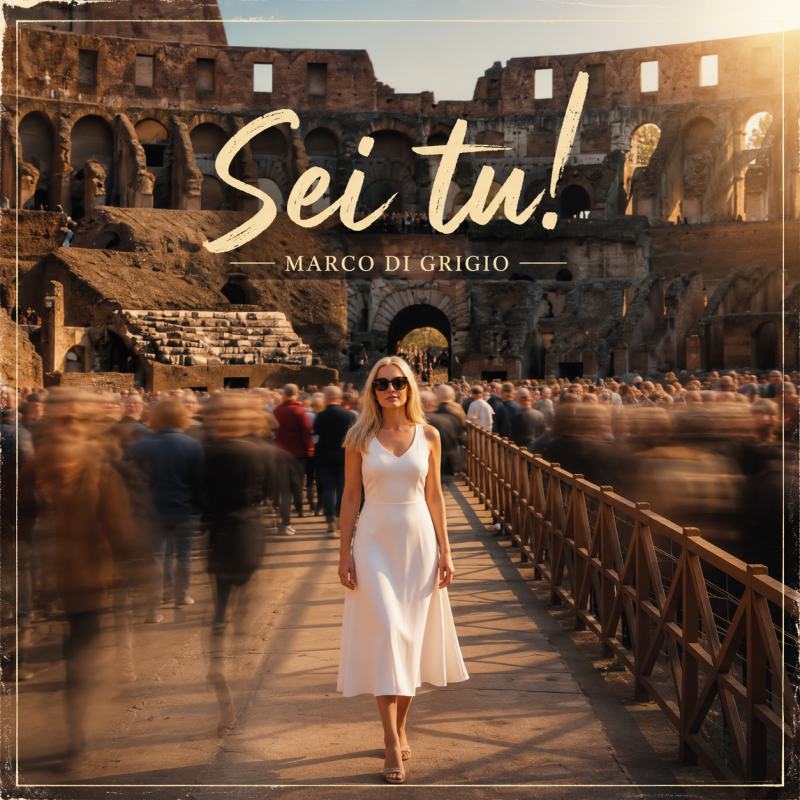
“Sei tu!” è un messaggio appassionato rivolto a una donna che non riesce sempre a riconoscere il proprio valore.
Dubita di sé, non vede fino in fondo la propria forza e forse si chiede se sia davvero abbastanza. Ma l’uomo che le sta accanto vede in lei qualcosa che lei stessa ha dimenticato: speranza, calore, coraggio e un amore capace di restare anche quando tutto il resto crolla.
Con ogni verso cerca di liberarla dai suoi dubbi. Non le dice che deve diventare qualcun’altra.
Le dice: Sei già tu.
Sei la persona di cui mi fido.
Sei la mano che cerco.
Sei la forza che mi sostiene.
Sei la mia fiamma, il mio inizio e la mia casa.
Il momento davanti allo specchio diventa il cuore della canzone. Lei deve finalmente vedere ciò che lui vede: non una donna imperfetta, ma la donna il cui amore lo rende completo.
Tra un pianoforte caldo, un sax pieno di nostalgia, chitarre ruvide e un potente coro femminile, una supplica sommessa cresce fino a diventare una grande dichiarazione:
Smetti di dubitare di te.
Non devi essere qualcun’altra.
Sii semplicemente te stessa.
Perché sei tu, proprio tu, l’unica.
Sei du! - „Sei tu!“ ist eine leidenschaftliche Botschaft an eine Frau, die ihren eigenen Wert nicht immer erkennt.
Sie zweifelt an sich, sieht ihre Stärke nicht und fragt sich vielleicht, ob sie wirklich genügt.
Doch der Mann an ihrer Seite sieht in ihr etwas, das sie selbst längst vergessen hat: Hoffnung, Wärme, Mut und eine Liebe, die selbst dann bleibt, wenn alles andere zerfällt.
Mit jeder Zeile versucht er, ihr die Zweifel zu nehmen. Er sagt ihr nicht, dass sie erst jemand anderes werden muss.
Er sagt ihr: Du bist es schon.
Du bist der Mensch, dem ich vertraue.
Du bist die Hand, nach der ich greife.
Du bist die Kraft, die mich hält.
Du bist meine Flamme, mein Anfang und mein Zuhause.
Der Blick in den Spiegel wird dabei zum entscheidenden Moment des Songs. Sie soll endlich sehen, was er sieht: keinen unvollkommenen Menschen, sondern die Frau, deren Liebe ihn vollständig macht.
Zwischen warmem Piano, sehnsüchtigem Saxofon, rauen Gitarren und einem mächtigen Frauenchor wächst aus einer leisen Bitte ein großes Bekenntnis:
Hör auf, an dir zu zweifeln.
Du musst niemand anderes sein.
Sei du selbst.
Denn genau du bist die Eine.
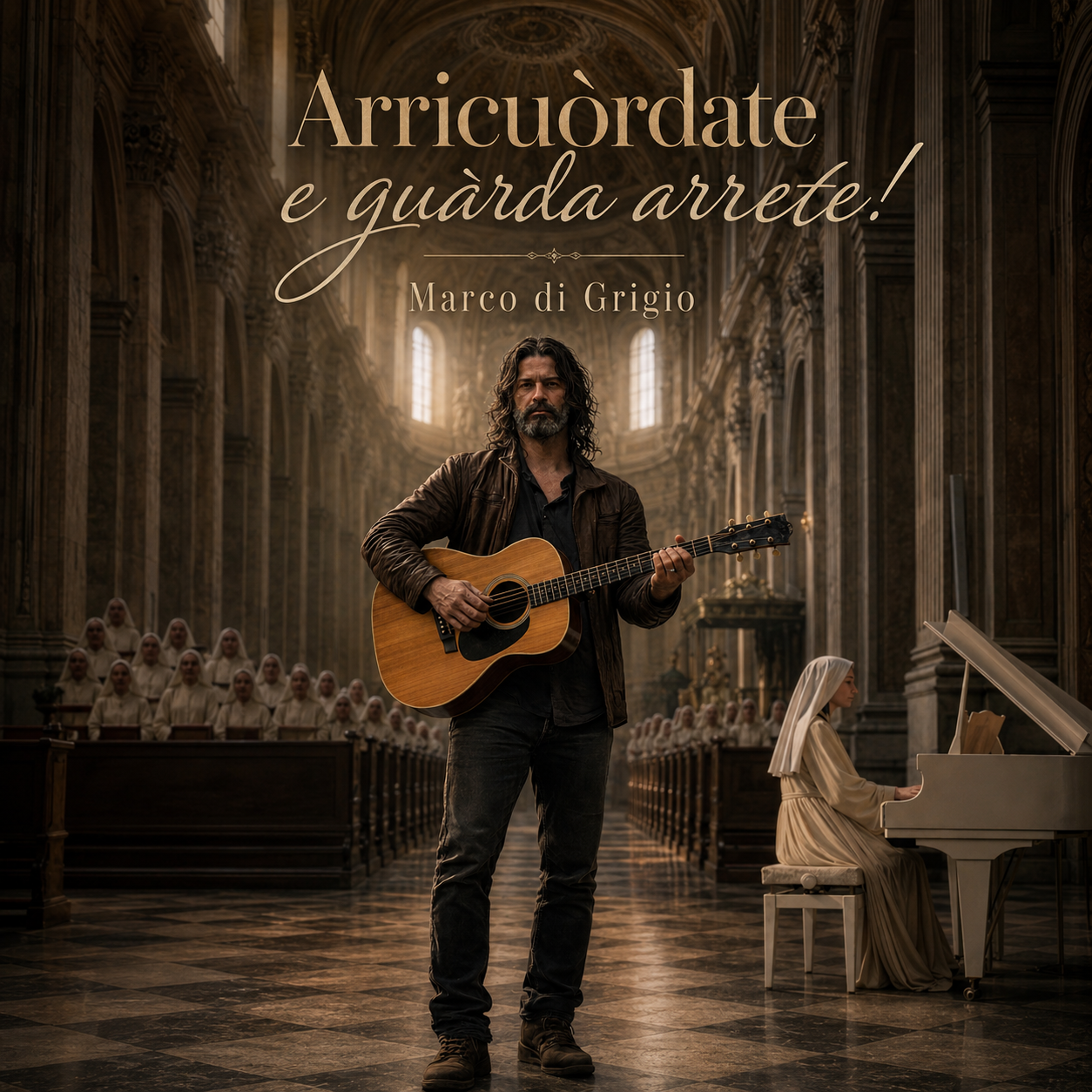
"Arricuòrdate e guàrda arrete!" - Chesta è na canzona pe fa’ curaggio, comm’a na mano ca t’accumpagna dint’â scurdata: nu uomo a canta pe ll’ammore suoje ca soffre, e a ce porta cu dulzore arreto, addo a forza soia era naturale, dint’ê juorne ‘e criature, cu prate ‘e state, viento mmiez’ ê capille e ‘o sciore ‘e dente ‘e leone ca se ne vola ncielo. Nun è scappata, è na chiave: si t’arricuorde d’’o tiempo d’’o tujo lùce, ‘a può truova n’ata vota. ‘A musica pare na preghiera zitta: voce d’ommo matura e ruciata, chitarra acustica comm’a pulse, e violino comm’a nu filo ‘e lùce ca carezza senza mentì. D’’a seconda parte entra nu coro ‘e femmene, angelo e respiro, ca porta ‘e parole senza cuprille. E a fine, ‘a voce se fa cchiù forte, quasi a cumbattere cu tte contra ‘e demone d’’a paura: ‘o riturniello torna duje vote comm’a nu giuramento, e all’urdemo resta sulo ‘o coro, puro e suspiso. E dint’â stanza, ‘na cosa sula: ‘o tujo lùce sta ancora cca. Arricuòrdate.
"Erinnere dich und schau zurück!" - "Arricuòrdate e guàrda arrete!" - Ein Trostlied wie eine Hand in der Dunkelheit: Ein Mann führt seine leidende Liebe behutsam zurück in das leichte Licht der Kindheit, nicht als Flucht, sondern als Schlüssel zum eigenen Mut. Klanglich wirkt es wie ein stilles Gebet: raue, warme Männerstimme, nur Akustikgitarre als Herzschlag und Geige als Lichtfaden über den Wunden. Ab Strophe zwei steigt ein himmlischer Frauenchor ein, trägt die Worte wie ein Echo aus Licht. Am Ende wird die Stimme kämpferisch, der Refrain kommt zweimal wie ein Gelöbnis, zuletzt schwebt der Chor allein. Zurück bleibt ein stilles Versprechen: Dein Licht ist noch da. Erinner dich.
Il mio mercato - Dopo una di quelle feste a cui devi andare, è stanco di volti finti e parole vuote. A Pescara cammina sotto la pioggia, solo per liberarsi la mente. Davanti al Café Midas si ferma, beve un espresso, accende una sigaretta e guarda il mercato che sta nascendo. Vede i volti veri delle persone, le loro cicatrici, la loro stanchezza, il loro aiuto reciproco, la loro gentilezza — vite autentiche, mani autentiche, dignità autentica.
Niente maschere.
Verità.
In quelle prime ore del mattino, nel suono della pioggia e nel silenzio tra sconosciuti, comprende la sua verità: Questa è la sua Italia. Questa è la sua vita.
Mein Markt - Nach einer dieser Partys, auf die man gehen muss, hat er genug von falschen Gesichtern und leeren Worten. In Pescara geht er zu Fuß durch den Regen, nur um den Kopf frei zu kriegen. Am Café Midas bleibt er stehen, trinkt einen Espresso, raucht eine Zigarette und schaut zum Markt hinüber, der gerade aufgebaut wird. Er sieht die ehrlichen Gesichter der Menschen, ihre Narben, ihre Müdigkeit, ihre gegenseitige Hilfe, ihre Freundlichkeit — echte Leben, echte Hände, echte Würde.
Keine Masken.
Wahrheit.
Dort, in diesen frühen Morgenstunden, im Klang des Regens und im Schweigen zwischen Fremden, erkennt er seine Wahrheit: Das ist sein Italien. Das ist sein Leben.

“AGRIGENTO, ANIMA MIA” - è na littra d’amuri granni a Agrigentu, scritta cu petra, sali e mimoria. Stu cantu s’arrizza cu la prima luci supra la Rupe Atenea, talìa Akragas d’assupra e segui li passi putenti dâ Vaddi di li Templi, unni li culonni grechi cumpari chi giganti di petra vegghianu supra la terra, e lu tempu porta ancora lu so’ eccu. Di ddà la canzuni acchiana nta l’ànima dâ cità vecchia, ’ntra li viculi stritti e mpastugghiati, unni li strati sunnu comu vini antichi ca teninu lu ciatu d’Agrigentu: la Via Atenea chi pulsa comu sangu vivu, la Scalunata di l’Artisti chi brilla comu cronaca culurata di na genti senza catini, e la seggia vacanti di Camilleri chi aspetta ca ti siedi e stai a sentiri comu la cità ti parra. Di notti l’aria sapi d’espresso, li gatti fannu fusa supra li coffani càudi, nu gòll di palluni scuppia cu lu jubilu di na bar e subitu veni spintu dâ vuci d’un tinuri sutta la doccia. E supra na scala, li ragazzi, cu nu jettublaster, sparanu ntô scuru lu cantu dâ banda di casa, li Dixit — “AS ALWAYS” — cu tutta la forza jùvini: chidda vitalità putenti dâ nova ginirazzioni ca nun sulu guarda e cunserva, ma ogni sira riaccenni l’eredità e duna â cità lu so’ dumani — forti, càuda e senza fini: lu novu ciatu d’Agrigentu, lu futuru dâ cità. Cantata ’n dialettu sicilianu, Agrigentu nun veni cuntata: veni chiamata, comu si chiama na fimmina cchiù granni dî palori. La musica crisci dâ vicinanza muta finu a nu riturneddu ca s’arrizza comu nu giuramentu, finu a quannu tuttu arriva â punta: lu primu vasu nta la Vaddi di li Templi, sutta nu suli ca scinni. Ddà l’amuri pû paisi e l’amuri pî cristiani si fannu na cosa sula, na luci ca nun si scorda. E Agrigentu nun resta sfunnu, ma battitu — anima ca sona, finché stu cantu campa. Sèntilu!

Agrigento, meine Seele! - „AGRIGENTO, ANIMA MIA“ - ist ein epischer Liebesbrief an Agrigento – geschrieben in Stein, Salzluft und Erinnerung. Das Lied steigt mit dem ersten Licht auf der Rupe Atenea empor, schaut über Akragas hinweg und folgt den mächtigen Spuren der Valle dei Templi, wo griechische Säulen wie steinernde Riesen über der Erde wachen und die Zeit ihr eigenes Echo trägt. Von dort steigt das Lied hinauf in die verwinkelte Altstadt, wo enge Gassen wie uralte Adern den Herzschlag Agrigentos tragen und jeder Schritt zwischen Palazzi, Treppen und Innenhöfen spüren lässt, dass hier Vergangenheit und Gegenwart in einem Atem wohnen: die Via Atenea als pulsierende Lebenslinie, die Scalinata degli Artisti als farbige Chronik einer ungezähmten Seele, der leere Stuhl bei Camilleri, der darauf wartet, dass man sich dazusetzt und zuhört, wie die Stadt zu dir spricht. In der Nacht liegt Espresso in der Luft, Katzen schnurren auf warmen Motorhauben, ein Fußball-Tor donnert mit Jubel aus einer Bar, abgelöst von der Stimme eines Tenors unter der Dusche – und auf einer Treppe tragen ragazzi den Song der heimischen Rock-Band Dixit — „AS ALWAYS“ — mit ihrer jugendlichen Kraft in die Dunkelheit hinaus: diese kraftvolle Lebendigkeit der nächsten Generation, die nicht nur bewahrt, sondern das Erbe jeden Abend neu entfacht und der Stadt ihr Morgen schenkt — laut, warm und unvergänglich: der neue Atem Agrigentos, die Zukunft der Stadt. Gesungen im sizilianischen Dialekt wird Agrigento nicht beschrieben, sondern angerufen – wie man eine Geliebte ruft, die größer ist als Worte. Musikalisch wächst der Song aus stiller Nähe zu einem Refrain, der sich wie ein Schwur erhebt, bis im letzten Bild alles gipfelt: der erste Kuss im Tal der Tempel unter sinkender Sonne. Dort verschmelzen Liebe zur Stadt und Liebe zum Menschen zu einem einzigen, leuchtenden Augenblick. Und Agrigento bleibt darin nicht Kulisse, sondern Herzschlag – eine Seele, die weiterklingt, solange dieses Lied erklingt. Fühle es!
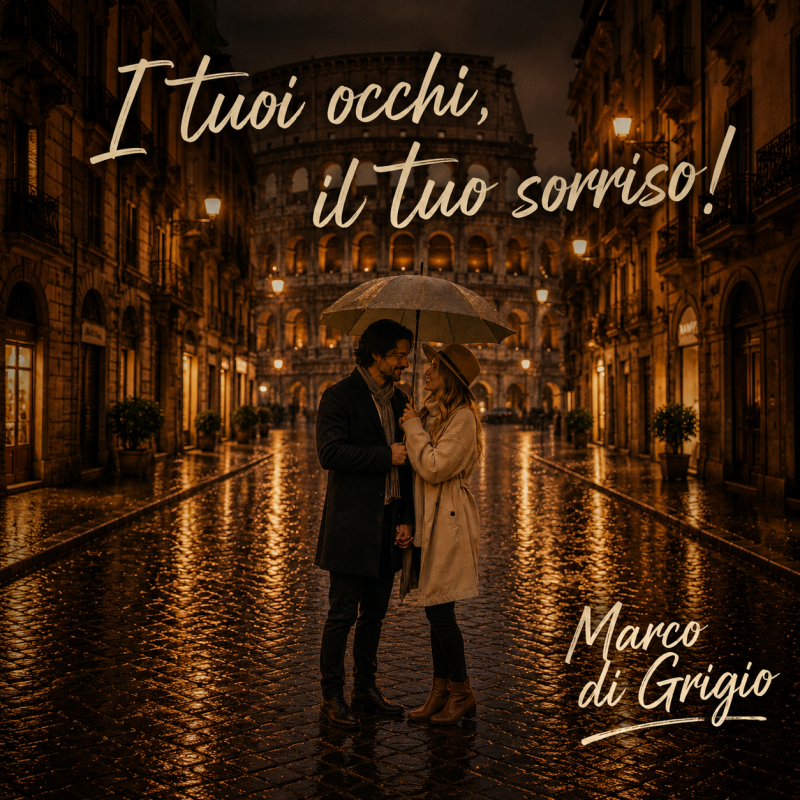
"I tuoi occhi, il tuo sorriso!" - Comincia piccolissimo, quasi un segreto: un caffè, un giorno quieto, e i tuoi occhi, il tuo sorriso, che scaldano la stanza più di qualunque riscaldamento. Fuori la città è grigia e stanca, dentro due mani fredde sul tavolo, eppure tutto è al sicuro, perché il cuore ha già deciso di restare. Poi arrivano le passeggiate tra strade antiche: l’oro dell’autunno nelle foglie, una nebbia gentile, un vento che sfiora piano i pensieri. Tra un passo e l’altro cresce una vicinanza che non spinge, accompagna. Quando la vita torna più fredda, il narratore stringe quel ricordo come una tazza ancora calda: la tua risata nell’aria d’autunno, la luce sul tavolo, due anime nello stesso respiro. Il canto diventa un mormorio, poi un coro, come se molte voci confermassero: è vero. È amore.
E alla fine, vicino, quasi sussurrato:
“I tuoi occhi… il tuo sorriso… rimangono con me.”
Il coro svanisce, l’assolo di chitarra si solleva lieve, e resta una sola verità: quel momento di allora ci porta fino all’eternità.
Deine Augen, dein Lächeln! - "I tuoi occhi, il tuo sorriso!" - Es fängt winzig an, wie ein Geheimnis: ein Café, ein stiller Tag, und deine Augen, dein Lächeln, die den Raum wärmer machen als jede Heizung. Draußen grau die Welt, drinnen zwei kalte Hände am Tisch, und doch ist alles sicher, weil das Herz längst beschlossen hat zu bleiben. Dann die Wege durch alte Straßen: Herbstgold im Laub, freundlicher Nebel, ein Wind, der sanft über die Gedanken streicht. Zwischen den Schritten wächst Nähe, ohne Drängen, nur als Begleitung. Wenn das Leben später wieder kälter wird, hält der Erzähler diese Erinnerung wie eine noch warme Tasse: dein Lachen in der Herbstluft, das Licht am Tisch, zwei Seelen im selben Atem. Das Singen wird Summen, dann Chor, als würden viele Stimmen bezeugen: Das ist echt. Das ist Liebe.
Am Ende ganz nah, fast geflüstert:
“I tuoi occhi… il tuo sorriso… rimangono con me.”
Der Chor verklingt, das Gitarrensolo hebt sich sanft,
und alles sagt nur noch eines: Dieser Moment von damals trägt bis in alle Ewigkeit.

Tempo! Tempo! - Una canzone sulla velocità, la quiete e il risveglio.Un uomo corre sotto la pioggia — in ritardo, come sempre. La giornata comincia nel traffico, nel rumore, nel ritmo della città. Corre, perché corrono tutti — perché la vita gli ha insegnato che arrivare conta più che respirare. Ma a un semaforo si ferma. Il suo riflesso in una vetrina lo trattiene — e per la prima volta si vede davvero. Sente il battito nel collo, il tremore nelle mani, e capisce: non è il mondo che lo spinge — è lui stesso. Fuori la città scorre, i sax chiamano come voci lontane. La pioggia suona come un cuore che batte. E all’improvviso la corsa diventa musica — e la musica diventa verità. “Non tempo. Solo vita.” Niente più fretta. Solo vivere.
Tempo! Tempo! - Ein Lied über Geschwindigkeit, Stillstand und Erwachen. Ein Mann jagt durch den Regen – zu spät, wie immer. Der Tag beginnt im Stau, im Lärm, im Rhythmus der Stadt. Er rennt, weil alle rennen – weil das Leben ihm eingeredet hat, dass Ankommen wichtiger ist als Atmen. Doch an einer Ampel bleibt er stehen. Sein Spiegelbild im Schaufenster hält ihn fest – zum ersten Mal sieht er sich selbst. Er spürt den Puls im Hals, das Zittern in den Händen, und begreift: Es ist nicht die Welt, die ihn treibt – es ist er selbst. Draußen rauscht die Stadt, Saxophone rufen wie ferne Stimmen. Der Regen klingt wie Herzschläge. Und plötzlich wird aus der Hetze Musik – und aus der Musik: Erkenntnis. „Non tempo. Solo vita.“ Kein Tempo mehr. Nur Leben.